
Well, if I were Roman Catholic, my sympathies would clearly lie with the SSPX, but the problem there is it is by definition committed to those very papal claims that set up this whole problem. But my reason for saying that nonetheless is that they clearly DO adhere to traditional Roman Catholic doctrine as manifest in their practice, i.e., Latin Tridentine rite, traditional vestiture and pieties and so on… the “little” indicators that they are at least intending to uphold their understanding of tradition. (We’re back to Dr. Tiller’s version of intention again.)
3 Likes
This is the wheat from the tares era. It is a complex issue to tease apart, interminable argumentation. While that is continuing, the Church is separating into the pre and post Vatican 2 camps. The Church will decide where their respective faith and hearts lead and as at the Siege of Carcassonne, let God decide who were the true Christians. Local Latin Mass communities are growing in numbers and membership. Who cares if consecutive Popes in error or the entire curia, the College of Caridinals, Synod of Bishops, the various Congregations continue to dissemble and “count” their theorectical angels while they do. Catholics are confused, dubious and distrust the evisceration of the cathechism and magisterium. A reset is underway which reverts the Church to pre-Vatican 2 status quo while radical it is not schismatic , but the proponents of changes since Vatican 2 may well be. In the end, the clergy guide and provide for the sacraments but the Church’s members own their resepective spiritual development in the faith and their individual relationships, with the Divine.
I suppose if I were a Catholic and went to a Latin mass, not understanding the Latin verbiage, it would seem like a magic incantation. My faith in the whole experience would be the take away.
Modernity be damned…
1 Like
1 Like
I think it will go MUCH deeper than a return to the status quo ante Vatican II… that will solve nothing… Vatican II is the direct result of Vatican I, and that in turn the direct result of older decisions.
2 Likes
Guess that leaves me out…,
“ Consequently, every man must be a member of the Catholic Church in order to save his soul, and there is but one baptism as the means of being incorporated into her.”
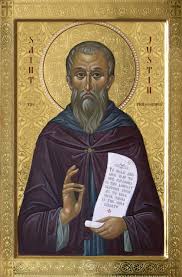
… me and you both. Although me and my peeps do have a patron saint.
Saint Justin Martyr
1 Like
Yeah understandable, he seems to get it….the cause of ideas is a tricky one.
Then Justin told his own experience:
"Straightway a flame was kindled in my soul; and a love of the prophets, and of those men who are friends of Christ, possessed me; and whilst revolving his words in my mind, I found this philosophy alone to be safe and profitable.”
Unfortunately safe wasn’t in the cards
however, profitable certainly was over the millennia for those taking and promoting the narrative as true.
A very good patron to have… one of the very first church fathers I read long long ago in college.
1 Like
E. Michael Jones take on Life Site News, among other things.
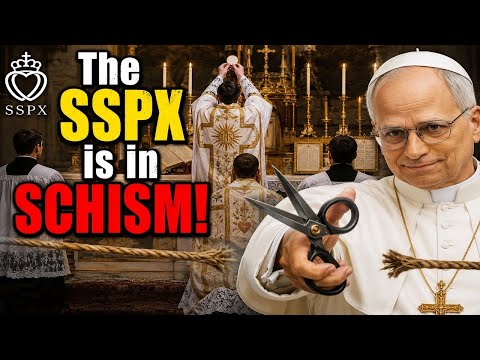
Interesting, thanks for posting. Never really understood the workings of “The Club of Rome” though few escaped its impact on hindering and helping development of civilization.
1 Like
… Good One!
1 Like
Geez I think I’m familiar with this saying as a lay person: Those living in glass houses shouldn’t throw stones.
Medice, cura te ipsum" is a Latin phrase meaning “Physician, heal thyself,” which appears in Luke 4:23, where Jesus references it to indicate that people often demand proof of one’s abilities before accepting their message. The proverb suggests that one should address their own flaws before criticizing others.
1 Like
1 Like
“Though some may experience pain towards our actions, we experience pleasure out of love for humanity.”
1 Like
… I was at the SSPX Chartres-Paris pilgrimage. It made me realize they are not 'schismatic' - LifeSite
This headline should be at the root of the entire being of the church. Unfortunately not, and the Vatican has moved further and further away from these very fundamentals in favour of politics du jour while progressing towards the more technocratic along that path. Am actually anticipating a Gospel of Transhumanism anytime soon since we’re discussing and up for baptising “Aliens”… The Vatican, it would seem has not removed to any great distance from the playbook operated under Senores Cortez, Pizzaro et al.
Am not versed enough to comment on the early schisms, of the Christian church East and West, except perhaps for some line of sight into the so called “Celtic church” which was mostly anchorite / monastic and influenced by the early desert monks and fathers (Syriac, Palestinian and Coptic/Egyptian) who arrived in Ireland long before prior to Patrick or should I say Maewyn Succat, the front runner for his given name. His mission was to undermine these early Christians and to graft on the Roman Church’s governance, and it was about governance and perhaps gun boat (the Roman Variety) diplomacy as his first port of call and political challenge was precisely aimed at the then High King in Tara.
Trade between Ireland, Southern England/Wales, Brittany with North Africa and points east in the Mediterranean had been well established back to Phoenician times. The sea wasn’t a barrier it was a highway. Tau crosses pepper the West Coast of Ireland. Many towns and villages have the term Disert/Dysart/Dysarght and variations of the same within their current names, a term meaning desert, removed or isolated, with attendant ancient churches’ remains still visible. MacNeill (1974, p16) makes the pint that Gildas asserts Christianity entered England (and Ireland) in the year 37AD under the reign of Tiberius. There is no corroborating source as yet to support this assertion. But it is more than likely it did so during the first century AD.
Archetypes of the “Trinity” are embedded in many socio-cultural values e,g. Brehon Law (very progressive) and social/cultural/religious belief systems. Early Christian rituals and benedictions had many nature-based themes and references. Kuno Meyer studied Celtic triads and published in 1906, under the auspices of the Royal Irish Academy. The Triads of Ireland. The similarities of location of Skellig Michael (named for St Michael Archangel) reminds closely of Meteora or Mount Athos. The Skelligs are a string of rocky outcrops (hardly islands) which you strike first when approaching Ireland from the southwest and Atlantic.
You may have actually seen the Skelligs feature in Star Wars VII “The Force Awakens” and VIII “The Last Jedi” perhaps a nod, if a commercialised one, to the islands’ original tasking, mission and eventual purpose as the Roman Church took hold of the country post The Council of Whitby over the date of Easter. Which seems to have included this debate as an embedded ecclesiastical/ political device and not solely purposed regarding the merits of theological issue itself. But I may be wrong on that point. They are also the most westerly limit to the St Michael line transecting Skellig Michael Ireland Mount St Michael Cornwall UK, Mont St Michel Normandy France, several St Michael locations through Italy the last being in Gargano Italy, The Panormitis monastery of St Michael on Symi Island, Greece and terminating its most Easterly limit at the Stella Maris Monastery of Mount Carmel in Haifa, Israel. Several being established in equidistant segments along the St Michael line itself.
We do need to get back to our first principles, begin as Christians, and reorient, review and rebuild. Or as the Irish word “Machnamh” (a personal favourite for several reasons) which can mean to remember, reflect and reimagine. It may be somewhat more feasible for RC faith adherents to do so from the SSPX position than the Vatican’s current cul-de-sac. The return to and growth in Latin Mass worship is a strong indicator for the spiritual desire to do so.
So if the good Dr F is considering a greater focus in blogging, dialogues or video chats, at some future point on matters theological, I would very much welcome his insights regarding these first principles and in particular the whole concept of “Trinity” with its initiatory/symbolic layering, which I have as yet to explore adequately.
Sources:
COURTENAY, WILLIAM J. "JOHN T. MCNEILL, The Celtic Churches: A History, AD 200 to 1200. Chicago and London: University of Chicago Press, 1974. Pp. xiii, 289. $10.00.
McNeill, J.T, The Celtic Churches, Chicago, 1974
Meyer, Kuno. The triads of Ireland . Vol. 13. Hodges, Figgis, & Company, Limited, 1906.
1 Like