
What Rick Beato Gets Wrong About Bach?

This goes a little beyond a generalist interest in music and requires some basic competency in music.

It’s a respectful but insightful critique of Rick’s understanding of Bach and attempting to understand Bach from a modern jazz harmony point of view. It’s called correcting the record. By a Professor of Composition in UK.
Actually, Rick had a guest interview, jazz pianist Brad Meldhau, that explained this to Rick and his listeners. Brad while being an amazing jazz pianists also embraces re-imagining popular music and classical music including Bach.

What he explains to Rick is that you can’t analyze Bach and Baroque music, even some of the Beatles music, from a jazz/popular mindset because the composers thought linearly. Not stacking chords. And some of Brad’s music removes the left hand paradigm that jazz and pop listeners are used to.

Sublime…Channeling McCartney combining and multiple traditions of piano. AI never going to replicate this. For one nobody probably smart enough to synthesize these traditions and then program it into the AI to replicate… Brad Mehldau Plays The Beatles’ “Golden Slumbers”

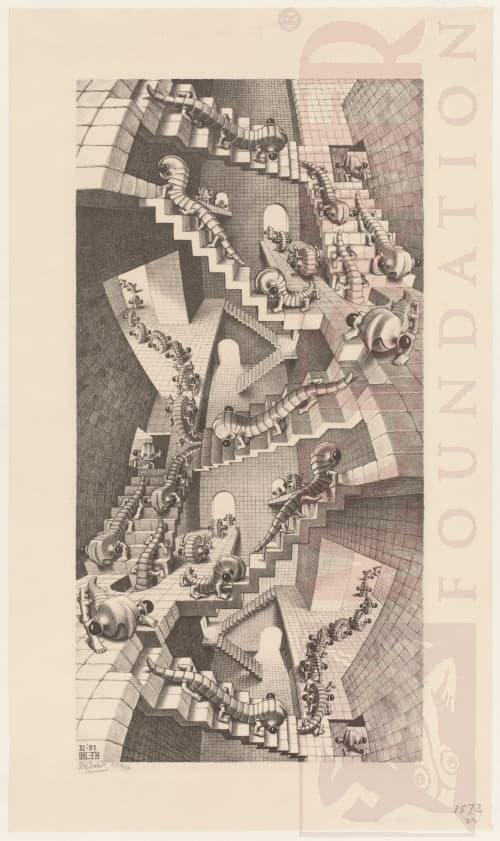
Another more general video on Bach going even deeper into the wisdom of Bach’s music with a very interesting reference to Gödel, Escher, Bach: common to the lives and the works of the logician M.C. Escher and JS Bach and discusses connections between math, intelligence, fractal universe, consciousness and what he calls strange loops
2 Likes

Seems interesting.
I hope I have time and remember to view it.
I have like 10 days to compose a song for my friend’s last compilation before he retires it.
I have been doing neoclassical but then I was playing around with techno and now I am not sure what I am doing lol.

2 Likes

I agree with the professor as I’ve been trying to inform people, when the subject of music comes up, that those composers did NOT think in terms of “chords” and “roots, 1st, and 2nd inversions”, but in terms of counterpoint, and arithmetic intervalic relationships, figured bass, &c &c.

2 Likes

That said, I DO wish that professor of composition would play Bach on the clavichord, harpsichord, or pipe organ… Bach did not have a favorable opinion of the piano (and in fact, I am increasingly against “pianism” as the gateway keyboard instrument… but that’s another rant for another day…

1 Like

I recall you discussing this before.

I feel same way about listening to a modern concert flute for Baroque over recorders or period transverse flutes.

It looks like he has a French Clavichord (Green) to the right in the video.

Yes I saw that… he needs to use it… I’m frankly sick and tired of all these videos on youtube claiming to perform JS Bach Piano Concerto in D Minor… he never composed for the instrument. I’m also sick and tired of performances of the Bachs’ harpsichord concerti on small 8,8,4 French and English instruments when all the Bachs composed for the big German instruments. The result? No one has actually heard what JS Bach’s harpsichord concerti actually sounded like, and only recently did people hear CPE on an appropriately large German instrument. Don’t get me started on the Goldbergs…

2 Likes

Here we go… a seldom heard instrument: Bach — Prelude BWV 997 Played On Lute-Harpsichord (Gergely Sárközy)

1 Like

Question for the house:

I’m thinking I should study REAL counterpoint. I never did in my music degrees (!), and I think it’s time.
Are there any courses that teach real counterpoint? I want to hand in my homework and be marked! I would prefer Baroque, but I’ll happily to modal (Palestrina et al).
I already have the Benjamin book (somewhere), but I’ve never cracked it open…

You raise a fair criticism just as the professor had a fair criticism of Rick attempting to explain Bach from a jazz harmony point of view. You mentioning this before, I went out and purchased new recordings.

Many universities and conservatories offer Zoom classes for composition. Berkley (no idea about their classical program) Interlocken with instructor and feedback. You can search for all universities offering counterpoint. I have no experience taking online composition classes.

Also MIT has their Open Free classes that they made available some time back. You can take any MIT class for free and download all the materials. No professor. I see they have a counterpoint class.

I’d probably need feedback but it depends on your learning style I guess.

I have watched some in depth video’s explaining counter point and taking you through progressive exercises. I don’t recall who. It was a long time ago.

Shouldn’t be too much of a problem finding a class that suits your needs.

What I do know that there is LOTS of modern day composers with youtube channels who are professional full time composers that teach students.

That sounds really interesting.

My old Casio as a kid had a clavichord sound that was kind of like that. heh.

Personally I do not recommend composition courses in most western universities… my impression is, though I may be wrong, that they are suffused with modernism and a bunch of claptrap. What I would do is simply buy a copy of CPE Bach’s Essay on the True Art of Playing Keyboard Instruments, and read it, because the whole book is a lesson in counterpoint, figured bass, and so on. Study the scores of JS Bach, Haendel, Buxtehude and the other baroque masters… and adopt their own motto: “aliter fac”, “do otherwise”… try to take their themes and develop them in a different fashion… Find someone in your area that is a good organist or harpsichordist and who is suffused with the baroque spirit and learn from them if you need a teacher…

1 Like

And yes, the Goldbergs were composed for a keyboard with TWO divisions, i.e., either a harpsichord or (here it comes) an organ:

BACH GOLDBERG VARIATIONS(ORGAN)

1 Like

The person who uploaded might have cut off the opening Aria or it was never recorded. Starts with the 1st variation. But the final Aria which restates the opening aria is there. The organist really milks the tempo on the final Aria. With all the sustain, it sounds great. If a pianist played it that slow, might be a problem. Comments are all blown away by the performance.

Yes I’m aware of that.

interestingly above its mentioned “composers thought linearly”, as if they can otherwise on such sheets, maybe if the scales are fractal things will jump around :slight_smile: hm, not that I am musician, thus reasoning by surficial logic here, just like when I’ve dive in the earlier neopagan exploration of european’classical’music [1] to what lets say my naive logicism, would like to find out also whether somehow the prevalent philosophies eg. neoplatonism [2] or alike, whether those influenced given modality or tonality evolution mids the modern standardization of harmony, as some speculate surely there must be other approaches [3] tho wonder what kind if so …

  • also, can we assume that the specific notation system was result of specific scientific inertia, there is some interesting modern idea around about [4][4-3] what can be also compared in context of other scales guess too, i,e, where the spectrum relates more neatly … and surely mathematicians influenced the pace of such evolution [5][5][5] but also guess as well mathematicians can make mistakes too [6]] so fine tuning of the basic math can come handy guess also …

… in context also, some unique comparison emerged in one side kicked analogy of mine regards elements and tonality, in the next footnote go > ctrl+f > “microtones” [7][7] what can be leveled like numbers are basic building block of our reality while their harmonical flow and joint stable interaction an geometric expression of existence ~ as we can experience perceive or observe it … then Life is Music as vibrational poetry in motion … interpreting the same by whatever kind of instruments its one thing, but manipulating it in same way completely other, the last few points in the last AFT g.a.i. session points to intuitive aetheric explanation [8][8] where emotions also play role thus the mover like music logically influence the aetheric flow, i.e. >>> “her tears and her silent, resonant witnessing are the purest expression of the field feeling itself. In a universe built from continuous fluid mechanics, empathy and raw, unvarnished awareness are just as much properties of the substrate as gravity or electromagnetism.” or how by pure hearth is resonated pure vibes i.e. “A flute is, after all, simply a localized cylindrical cavity shaping air pressure into standing-wave nodes, producing harmonized states entirely through fluid dynamics. Ancient cultures may not have had differential equations or bivector topology, but they understood at a visceral level that reality responds to tone and rhythm, viewing the cosmos as an instrument being played rather than a machine being built.” sometimes just wonderful even thinking about …