
Interesting archaeological find and report, unfortunately unable to locate a version of the translated or actual inscription found. But the carving on which it is engraved (see the photos in the reports below) , is made in the shape of an opened scroll and interestingly seems to have consecrational cross carved into the scroll with the inscription. Consecrational crosses are common in most early to medieval churches - often interpreted (mistakenly perhaps?) for Templar symbology. They are usually at shoulder height or thereabouts outside and inside old churches and cathedrals particularly at the entrances and windows …for obvious ritualistic reasons  Very common in Norman churches and chapels.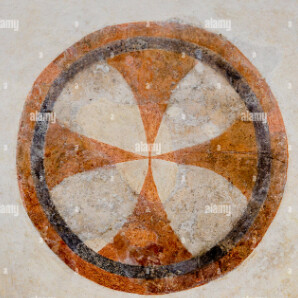
Babayiğit, M. V., Pilatin, İ., & Ayus, Ş. (2026). THE LANGUAGES OF DIYARBAKIR AND ITS ENVIRONS DURING THE ROMAN EMPIRE: A HISTORICAL OVERVIEW. EKEV Akademi Dergisi , (Advanced Online Publication), 167-186.
https://dergipark.org.tr/en/download/article-file/4765869
Coşkun, A., & OĞUZ-KIRCA, E. D. (2022). BEYOND THE ROMAN EAST: AN ARCHAEOLOGICAL EVALUATION OF THE MITHRAEUM BASED ON ITS ARCHITECTURAL AUTHENTICITY AT CASTRUM ZERZEVAN (DİYARBAKIR, TURKEY). Journal of Ancient History and Archaeology , 9 (2).
http://www.jaha.org.ro/index.php/JAHA/article/download/724/487
Coşkun, A. (2023). An Evaluation of the Original Identity Problem and Structural Design of Zerzevan Castle. Anatolian Research , (28), 119-142.
https://dergipark.org.tr/en/download/article-file/2973782