Magnificent!


Magnificent!
And at The Olympics. First ever moves in history of the sport.
5:05 PM ET
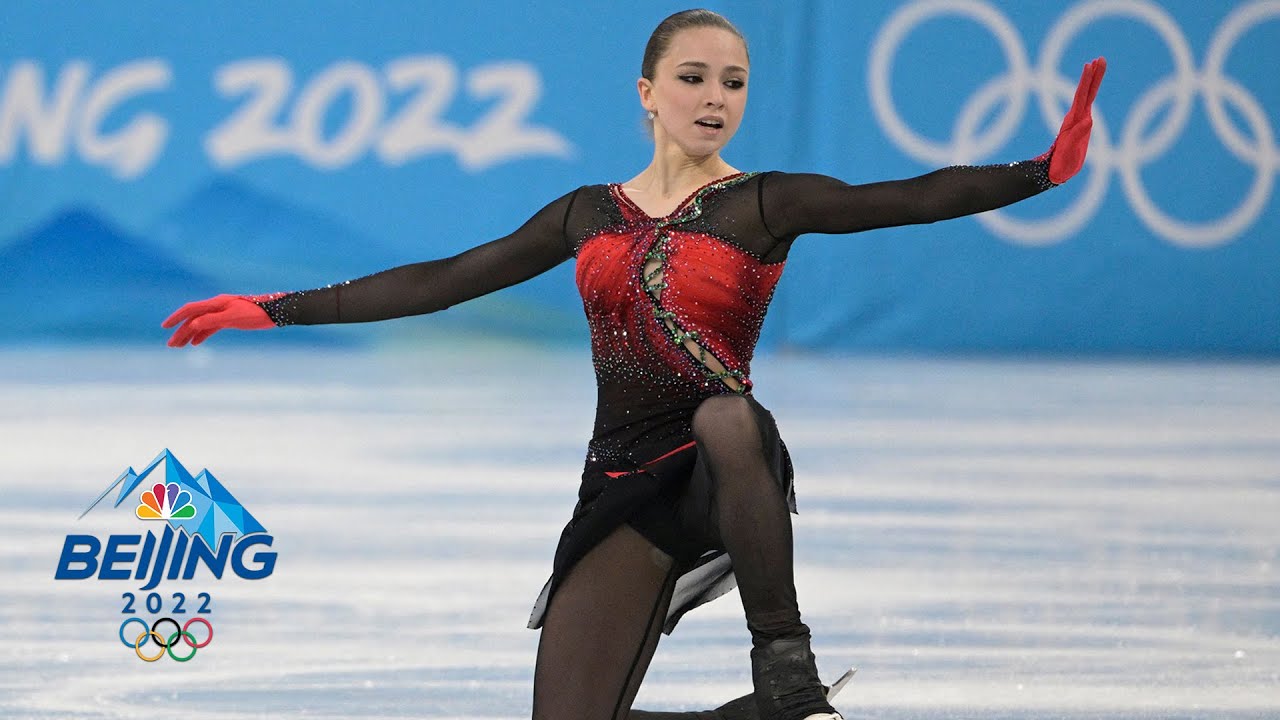
BEIJING – Russian media reported Wednesday that 15-year-old figure skater Kamila Valieva had tested positive for a banned drug, after the ceremony to present her and her teammates with their Olympic gold medals was postponed for unexplained legal reasons.
Newspapers RBC and Kommersant named the drug as trimetazidine, which is typically used to treat chest pain.
The news broke late at night in Beijing, where Valieva was part of the Russian Olympic Committee ensemble that won the figure skating team event Monday ahead of the United States and Japan.
Reuters attempted to reach the ROC chef de mission for comment, but his phone was not answered. The ROC earlier declined to comment on reports that Valieva had returned a positive test.
The teenager delivered one of the highlights of the Beijing Games so far when she landed the first quadruple jumps by a woman in Olympic competition. She was one of four ROC skaters who did not appear at their practice sessions Wednesday.
Figure skating is a prestige sport for Russia, one in which it has an outstanding record at Olympic and world championships. Any move to penalize Valieva or strip the team of its medals would likely cause a national outcry.
Prominent journalist Vasily Konov, deputy general producer at Russian sports channel Match-TV, said without citing sources that the sample in question had been taken two months ago.
Kamila Valieva was part of the Russian Olympic Committee ensemble that won the figure skating team event at the Beijing Olympics. Harry How/Getty Images
“The drug trimetazidine does not help an athlete in any way. At all. It was found in one single sample in December. A minuscule amount. Nothing in her samples before or since,” he wrote on social media.
“There is no doping in the conventional sense. No! This cardiac drug has no impact on … performance. Now leave Kamila in peace.”
Former Russian pairs skater Tatiana Volosozhar, who won two gold medals at the 2014 Sochi Olympics, showed solidarity with Valieva on social media, calling for the use of the Russian hashtag #Iwillneverbelieve to send the teenager support.
Her post was “liked” on Instagram by Valieva herself.
Trimetazidine, or TMZ, works by increasing blood flow to the heart and limiting rapid swings in blood pressure. The drug is not approved for use in the United States. It has been on the World Anti-Doping Agency (WADA) list of prohibited substances since 2014.
Dr. Sadiya Khan, a cardiologist and assistant professor at Northwestern University Feinberg School of Medicine, said that in theory such a drug might be used in a healthy person to enhance blood flow above and beyond normal levels.
“The idea behind it would be potentially if you enhance blood flow, you could improve somebody’s ability to exercise longer or exercise more efficiently by allowing the heart to respond super-normally,” Khan said in a telephone interview.
But using any medication in a way for which it is not intended could have negative side effects, even if those risks are not known. “I think it could be very dangerous,” she said.
The other caveat, she said, is that it is not clear that it offers any performance-enhancing benefit.
“There’s a theoretical benefit,” she said. “There’s no strong evidence that it does make a difference.”
The case is further complicated by the fact that Valieva is only 15.
According to WADA’s world anti-doping code, athletes who commit doping violations should be publicly named, but this is not required if the person concerned is a minor under the age of 18.
In that case, according to Rule 14.3.7, any optional public disclosure “shall be proportionate to the facts and circumstances of the case.”
Earlier Wednesday, the International Olympic Committee said a need for “legal consultation” had forced the postponement of the medal ceremony for the figure skating team event won by the Russians.
“You can bet your bottom dollar we are doing everything [so] that this situation can be resolved as soon as possible. I cannot give you any more details, but we will do our utmost,” IOC spokesperson Mark Adams said.
The IOC, International Skating Union and the international agency in charge of drugs testing during the Games all declined to comment on media reports that the delay was caused by a positive drug test.
The Russian Sports Ministry said it was premature to comment on media reports about the reason for the postponement.
Russia has acknowledged some shortcomings in its implementation of anti-doping rules but denies running a state-sponsored doping program. Its athletes are competing at the Beijing Games without their flag and national anthem because of sanctions against Russia for previous violations.
@ColonelZ
Oh boy, what a mess! LOL! It might be interesting to see a squabble break out between Russia & China . Real life is always stranger than fiction. I still think she’s wonderful!
I don’t doubt it, but still not sure what the drug was.
My best friend started training with the best in the US starting at age 9 when her mother literally dropped her off in Lake Placid. As an adult, she stayed with me while retraining to be a figure skating judge. This doesn’t make me a pro, but I have watched skating up close and personal much of my life.
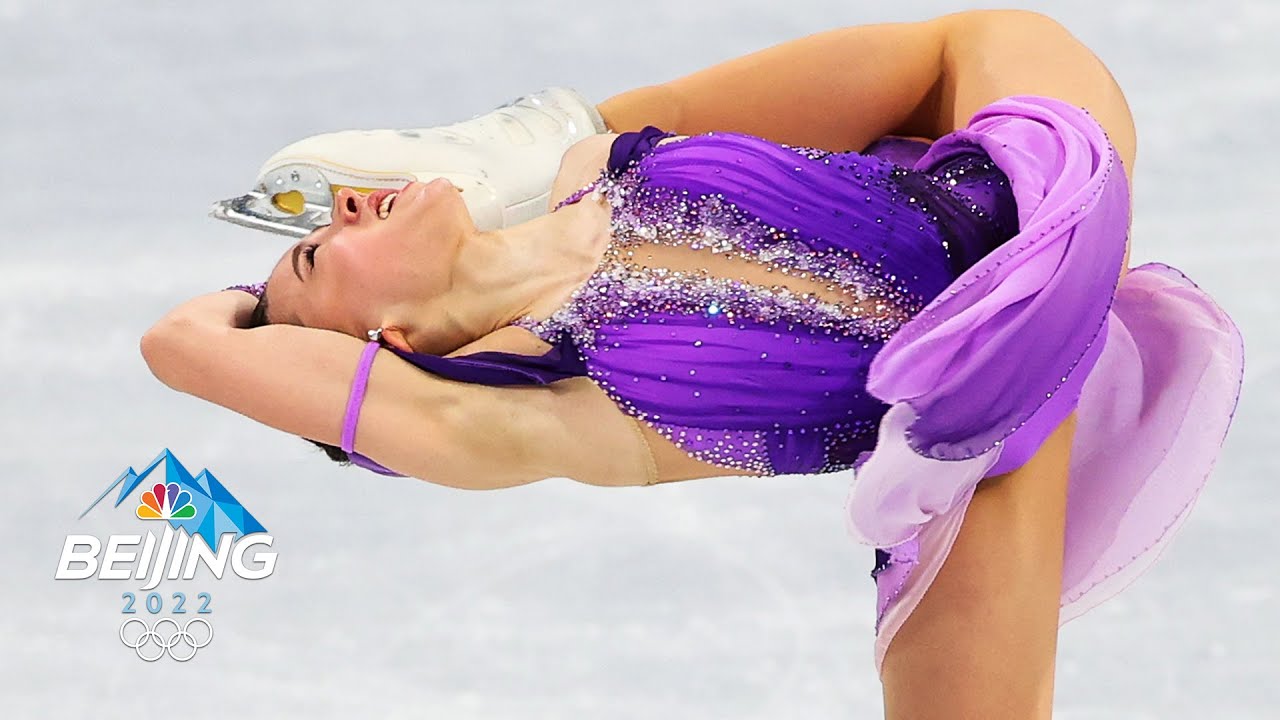
If this skater wasn’t on ice, she would be performing as a contortionist. Her arms behind her in the first few frames illustrates what 99,9% of olympic hopefuls could never do. She is amazing but absolutely one of a kind. You won’t see any of her moves done with this precision any time soon.
Getting real, what are the odds that she was jabbed to travel? Coinkidink? Circulation issues? Hmmm
Yes Ma’am, I think she’s a marvel and sadly, probably jabbed…
I agree! She was fantastic but why do they juice? She would win hands down, also what was she caught with, hopefully something minor. It could have been cough medicine 
@ColonelZ
That’s my question. What was the drug. I read an article yesterday, can’t remember what it was, but didn’t seem like juice. Frankly, I think the Chinese are jealous as all hell. A prodigy like this young Russian is once in a generation, or even 2 generations.
Sad. Why does a 15-year-old need this! Maybe medically she needs it, we can only hope. Valieva’s blood taken last month tested positive for trimetazidine, a metabolic agent often prescribed as a heart medication.
Two immediate possibilities come to mind:
#1 She was jabbed
#2 The stress of training so hard injured her heart.