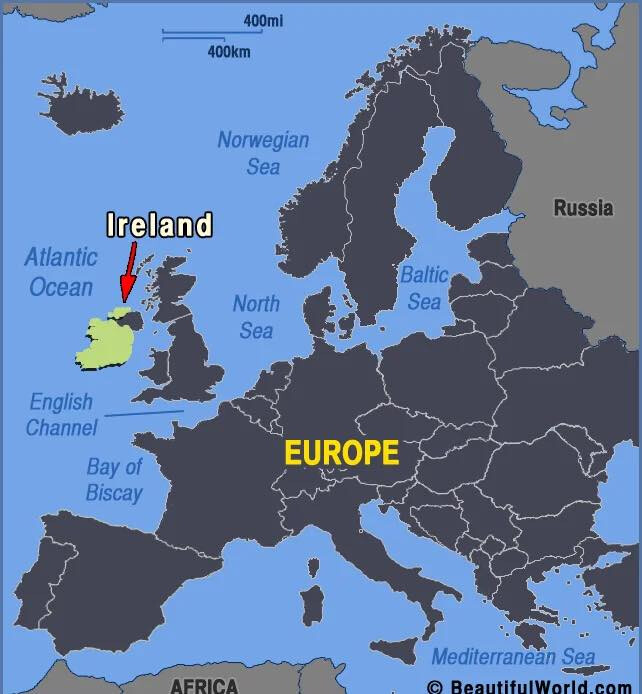
Ireland contributes twice the EU Contribution per capita to the EU (ref Kevin O’ Flynn below), and the 6th largest per capita paid out of the 27 EU members.
We now have at least 3 major investigations of corruption within the EU Commission.
It’s broken as an organisation/institution and is now running rogue towards initiating war with Russia to “undermine and breakup Russia”.
But really it is about the short to medium term fiscal blackhole (a lot to do with internal corruption and incompetence), assuaging egos, reputation rescue and emergency powers setup to avoid justice a la the Bibi gambit. And this is reflected by ongoing corruption cases Pfizergate. Qatargate. Moroccogate. Reyndersgate and more recently the Mogherini investigation.
Briefly we have:
1. Pfizergate (Vaccine Procurement Scandal) This long-running investigation centres on the European Commission’s €35 billion deal for COVID-19 vaccines with Pfizer, negotiated during von der Leyen’s tenure. Allegations include undisclosed text messages between von der Leyen and Pfizer CEO Albert Bourla, which the Commission has refused to release despite court orders. Critics claim this involved conflicts of interest, overpricing, and destruction of public documents.
Status: The EPPO is actively probing the case, with potential indictments expected by the end of 2025. In May 2025, the EU’s General Court ruled that the Commission’s withholding of messages violated transparency laws. A Belgian lobbyist, Frédéric Baldan, filed a criminal complaint accusing von der Leyen of “unlawful advocacy” and corruption. This has led to widespread calls for her resignation and a no-confidence petition in the European Parliament
2. EU Diplomatic Service Fraud Probe (EEAS Scandal)
Belgian prosecutors raided offices of the European External Action Service (EEAS), the College of Europe, and private homes on December 2, 2025, over suspected procurement fraud in a diplomat training program. The probe alleges favouritism, corruption, conflicts of interest, and breaches of secrecy in awarding EU funds.
Key figures: Former EU foreign policy chief Federica Mogherini (who resigned as rector of the College of Europe amid the probe) and senior diplomat Stefano Sannino are implicated. Von der Leyen has distanced herself, stating it’s an “EEAS problem,” but the scandal risks broader fallout for the Commission, with some calling it the biggest EU crisis in decades due to accountability issues.
3 Disappearing Texts and Transparency Issues
A separate inquiry by the EU Ombudsman involves von der Leyen’s use of Signal messaging, including a September 2025 exchange with French President Emmanuel Macron that the Commission refused to disclose. This echoes Pfizergate’s deleted messages and raises broader concerns about document retention and accountability.
Status: The Ombudsman opened an investigation in December 2025, criticizing the Commission’s practices. It’s tied to wider allegations of censorship and opacity under von der Leyen’s leadership, including the Digital Services Act (DSA).
Broader Context
These scandals have eroded public trust, with EU approval ratings dipping below 40% in some polls. Critics, including European Parliament members, argue they highlight systemic issues like elite impunity and misuse of funds (e.g., in Ukraine aid or defence programs). Von der Leyen has denied direct involvement in the EEAS probe and maintains the vaccine deals were necessary. However, a motion of censure against her was debated in Parliament in July 2025, and pressure continues for full disclosures. For the latest developments, monitoring official EU and EPPO updates is recommended, as investigations are fluid.
Conclusions:
- It is time step down the EU Political project and revert to the trading format and EEC structures.
- It is time for Ireland to pivot its economy towards BRICs (be my position for years now) as we are supposedly a non aligned country and we need to harden that neutrality take back control our own customs and borders.
- It is time for the Irish Diaspora worldwide to have a right to receive citizenship, to vote in all national, European and Referendum ballots. Eligibility for these to be extended to great grandparent relationship
- It is time to rapidly expand and modernise our defence forces, modernising military tech and tactics on lessons learned in The Ukraine. We need Air and Sea missile defences, we need large armed and surveillance drones rather buying tanks, jets and ships for now.
- It is time to build sufficient civil defence nuclear/biological shelters and power/communications being hardened and conducted underground.
- It is time to implement the hydroelectric projects first proposed in 2001 enabling a 50% surplus to growth requirement out to 2050. at the name to implement small scale fusion generation at block level even domestic level.
- It is time to organise and train up to a minimum 70,000 standing army/navy and drone piloting. There needs to be as in Switzerland, a 10 x trained reserve (2 years national service from 18y.o. and 2 training exercises per year). We need the newer smaller Swedish electric fast attack/reconnaissance submarines but only 4 or 5. We need fast smaller Swedish stealth craft acting as drone platforms, larger long range land based armed drones stationed in mobile launch transports, instead on WW2 thinking and larger target frigates, which is what they will be.
- We need best in class missile and air defence tech.
- This being done we can control our borders, airspace, sea space, and harden and revert to our original neutrality and non aligned status and where it needs to be both political and military neutrality.
- Be costly and difficult to attack, and even harder to hold. This assures our security and neutrality, like Switzerland does.
- These steps should be started in 2026 with a view for essential elements completed by latest 2029. We should work towards being in a position to economically, politically and militarily exit the EU if appropriate reform reverting to EEC format is not effective by then, and/or the corruption cases come to nought.
Sources referenced:
Statement by Kevin O’ Flynn TD (MP on English) Dáil Eireann/ Irish Parliament.
"Did you know how much each EU citizen contributes to the EU budget before any money comes back?
Based on 2024 figures, the average gross contribution per person, per month is approximately:
Ireland: €53
Luxembourg: €51
Belgium: €44
Netherlands: €39
Denmark: €38
At the lower end:
Bulgaria: €10.50
In simple terms, the average person in Ireland contributes over five times more per month to the EU budget than the average person in Bulgaria.
These figures reflect gross contributions only, meaning what each country pays in, before EU funding, grants, or subsidies are returned. Contributions are largely linked to national wealth through GNI. Lower income member states pay less per person and often receive more back, while wealthier countries tend to be net contributors overall.
The EU wide average is roughly €25 per person per month.
This is how EU solidarity works.
Understanding the numbers matters. Debate should always start with facts.
Source: European Commission budget data and independent economic analysis for 2024"