
1 Like
…expressed in God’s terms how many twilight zones are there,?
And which are the most severe?
Just before Dawn?
or sunset,sundown just before full darkness?
Descriptive Summary: Metaphysics, Money, and Meaning in a Dialogue Across Thought
Intro
- In this wide-ranging exchange, a thoughtful host and a guest navigate together through the big questions that shape our modern psyche.
- They unpack metaphysics, politics, religion, epistemology, and the philosophy of mind, all while examining how materialist worldviews interact with consciousness, meaning, and culture.
- The conversation is intimate, candid, and occasionally technical, yet it remains anchored in human experience: how we think, how we believe, and how we move toward a more integrated understanding of reality.
Center of the Dialogue: A Thoughtful Conversation Across Ideas
-
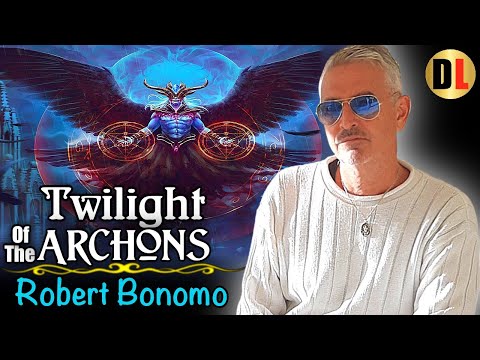
Core premise: the modern world is largely shaped by a materialist paradigm, but consciousness and meaning resist being fully absorbed by matter alone. The Twilight of the Archons documentary serves as a touchstone for this critique, arguing that money and consciousness illuminate the limits of materialism.
-
The documentary’s genesis and method are explained: a two-and-a-half-year project built from archived footage, with a voiceover inspired by documentarians like Adam Curtis. The film’s aim is not political advocacy but a probing inquiry into how money and consciousness challenge the current paradigm.
-
Archons as a symbolic framework: the guest explains gnostic cosmology’s archons as rulers of this world, using them as a metaphor for the systems of restriction that accompany the materialist view. These forces are not literal beings but archetypal pressures—from laws and culture to physics—that confine perception and experience.
-
Intertwined themes:
- How money is created and what money represents: the guest demystifies the money system by showing how deposits are created via loans, how debt underwrites the monetary supply, and how belief sustains the value of money. This mechanism reveals that money is a social construct—an ongoing act of future work backed by trust.
- Consciousness versus material explanations: the dialogue presses against the boundary between empirical science and the experiential core of consciousness. The guest emphasizes that science excels at predicting perceptual phenomena but does not inherently provide meaning. In this sense, meaning may require a cosmology compatible with science rather than a rejection of science.
- Archetypes and myth: both participants highlight that mythologies—and the archetypes embedded in them—shape cultures, economies, and political life. Materialism, while an archetype itself, cannot alone fulfill the transcendent longing that drives moral imagination and social justice.
-
A recurring tension: can progress through material science and economic reforms (e.g., Modern Monetary Theory, universal basic income) coexist with, or even give way to, a cosmology that acknowledges consciousness as foundational? The conversation navigates this tension with care, acknowledging that neither position has a monopoly on truth.
-
The role of science: the dialogue respects scientific achievements while insisting that science alone cannot supply life-meaning. The guest notes that meaning arises when empirical inquiry is joined with a larger narrative that accommodates consciousness, value, and the possibility of unity beyond division.
Outro -
The hosts acknowledge technical hiccups and lean into gratitude for the exchange. The guest invites continued engagement via channels, blogs, and future conversations, offering pathways for deeper exploration (e.g., the cactusland.com hub for writings and books).
-
Practical takeaways emerge alongside metaphysical ones:
- Understand money as a social contract in which value is co-created through debt and future labor.
- Recognize that meaning is not guaranteed by science alone; it requires a cosmology that can accommodate consciousness without dismissing empirical rigor.
- Embrace archetypal narratives as dynamic, evolving stories that can unify disparate communities and foster social evolution without resorting to dogmatic absolutism.
-
A closing invitation: the dialogue is not merely about disproving or proving a single theory but about nurturing a thoughtful, open-ended conversation that keeps faith with inquiry, compassion, and the human longing for transcendence.
Centerpiece sentiment: the conversation embodies a belief that truth resides at the intersection of science, philosophy, and myth—a place where money, consciousness, and meaning illuminate one another rather than compete for primacy.
- Final note to readers: seek more from both author and interviewer—subscribe, watch, and participate in ongoing discoveries about how we can live, think, and believe with greater coherence and care.