Juris naturalism. Your right to swing your fists ENDS where my nose begins.
If you think Natural Law is obtuse, you’re basically have eliminated the backbone of the philosophy that is responsible for our entire legal system.
William Blackstone the English jurist and author of the influential Commentaries on the Laws of England, presented a very clear definition view of natural law in the Introduction Section II: “Of the Nature of Laws in General”).
Once upon a time, it was widely read in Britain and America and shaped legal education and thought among the Founders. NOT ANY MORE!!
John Adams: Affirmed natural rights to life, liberty, and property. He linked the law of nature to reason, experience, and moral duties (justice, temperance, etc.), arguing that rights are “derived from the great Legislator of the universe” and cannot be repealed by human laws. He saw education in knowledge and virtue as essential under natural law.
Alexander Hamilton: In The Farmer Refuted he wrote: “The sacred rights of mankind are not to be rummaged for, among old parchments, or musty records. They are written, as with a sun beam, in the whole volume of human nature, by the hand of the divinity itself; and can never be erased or obscured by mortal power.”
FP_PS06.pdf
The lengthy essay exemplifies the found
ing generation’s fervent embrace of natural rights and
natural law, or “natural liberty,” that justify revolution
and provide the principles of legitimate government.
I can write a long list of founders and a Loong list of Philosophers back to Aristotle including the Stoics, John Locke, the Laws of Nature and of Nature’s God, Thomas Aquinas,who not only could define both terms but gave lengthy dissertations on the subject. All widely accepted and appealed to natural law (often paired with natural rights) as a foundational principle for independence, government, and individual liberty.
The Elements of Law, Natural and Politic by Hugo Grotius
Thomas Hobbes: A LAW OF NATURE (Lex Naturalis) wrote " is a Precept, or general Rule, found out by Reason, by which a man is forbidden to do, that, which is destructive of his life, or taketh away the means of preserving the same; and to omit, that, by which he thinketh it may be best preserved.”
I can assure you that none of these men were neither obtuse or bias that they injected their own personal meaning without some serious observation and contemplation on this subject.
Knowing full well that most people aren’t going to read texts by dead men who wrote fancy words, I’d like to represent to you, again and again, Richard Maybury, who might be the foremost expert in natural law and has been writing about it for 50 years in his Early Warning Report, I have all 50 years worth of obtuse writings as well as all his books used for home schooling that dismantles statist history. He’s also a far cry from the influencers on social media giving pseudo advice on the state of affairs of America.
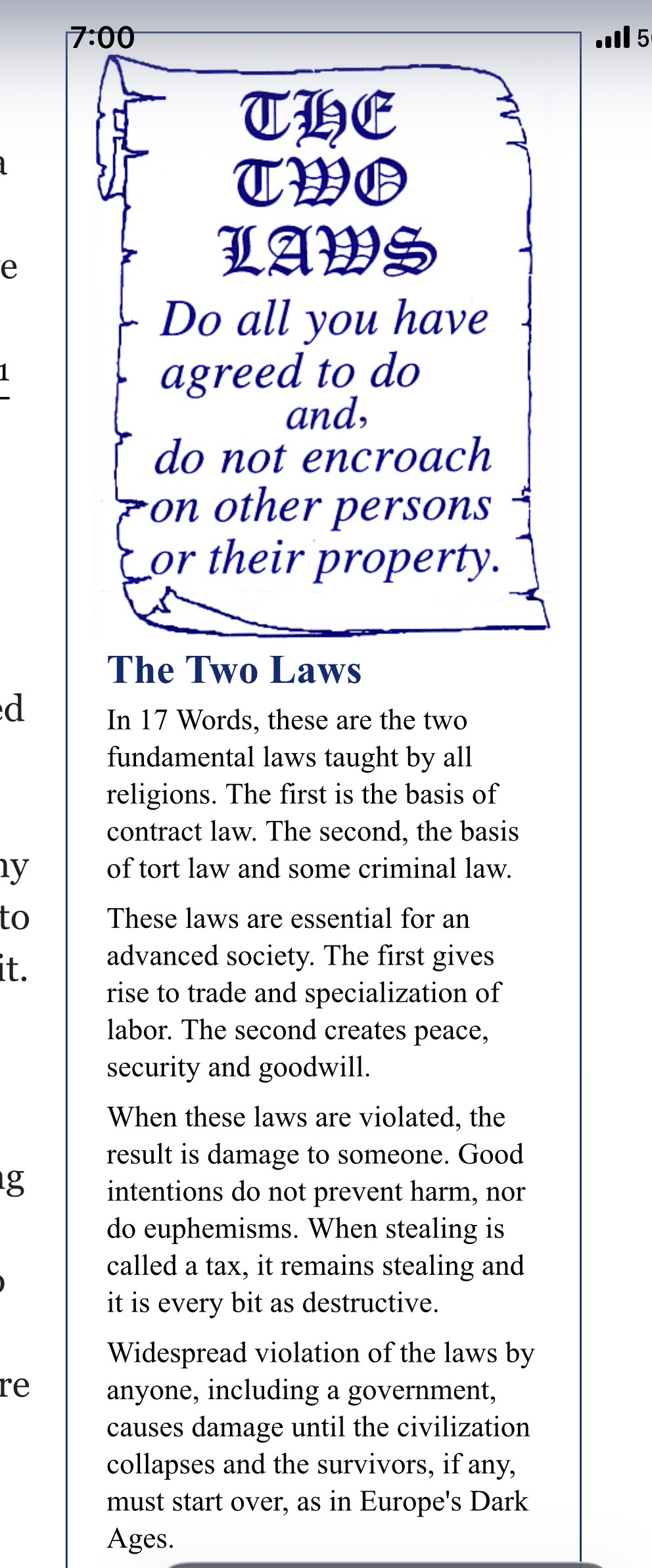
“Maybury distinguishes between political law (often referred to as ‘ruler’s law’ or majority-rule legislation) and natural law (or common law), which he defines as being based on ethics rather than edicts. He emphasizes that historically, common law was rooted in two fundamental principles: keeping one’s agreements and not encroaching on others or their property”
I think that’s not evidence to refute your assertion that NOBODY can define either term.
Here he defines natural law with great specificity. In 17 words and tells you how he arrived at those 17 words which out of respect must be repeated exactly as he wrote them.
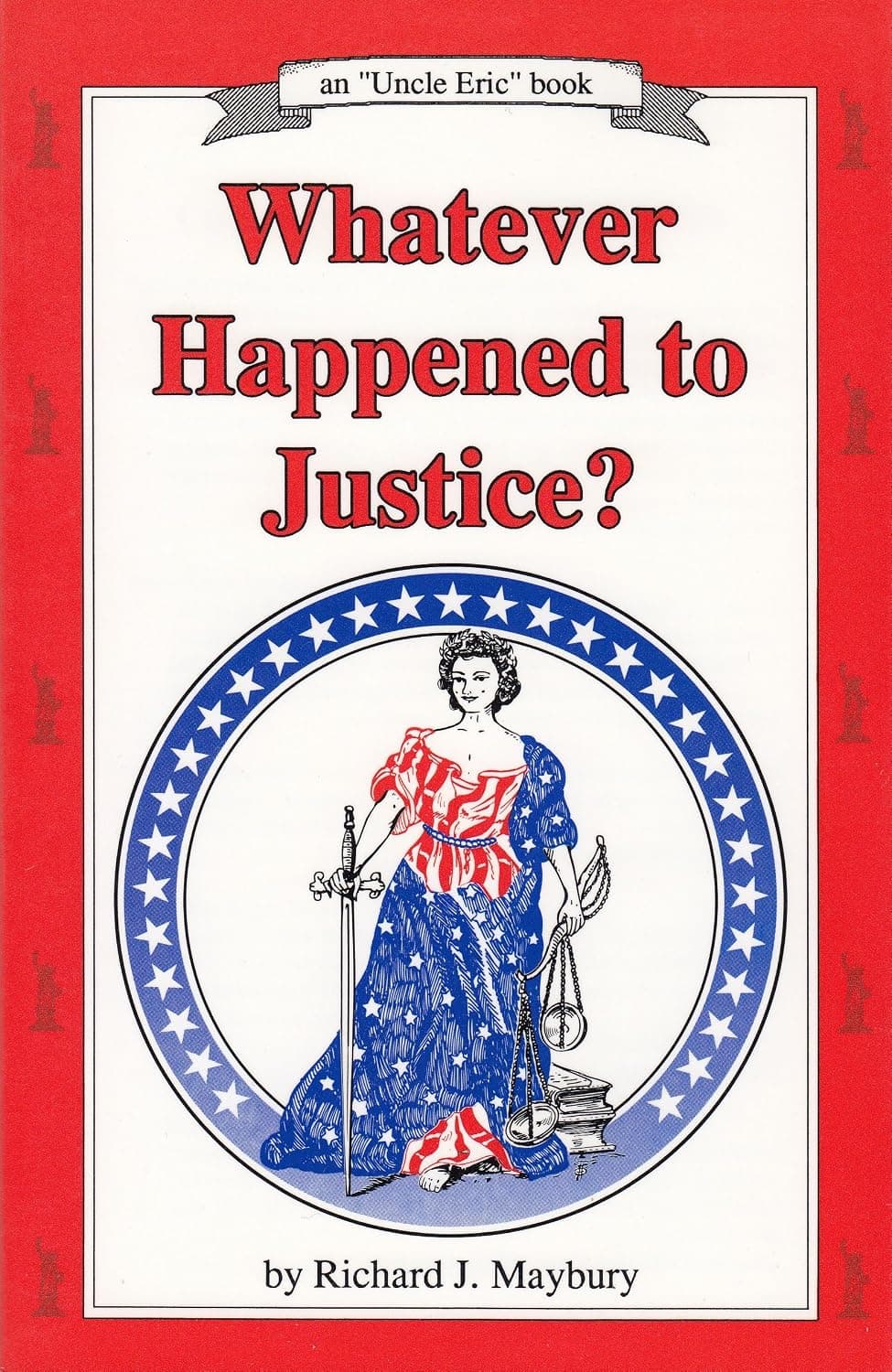
Whatever Happened to Justice is almost a cult classic. And being a guy that isn’t much into cults, I didn’t even belong to the boy scouts, this is the one exception because LIBERTY is dear to my heart.
Been reading about natural law most of my adult life. Don’t think three sentences is sufficient enough to erase 2000 years of history.
Tyranny is coming closer because this knowledge has been purged by the war mongers and the power holders. I must say they’ve done a damn good job of keeping this stuff out of public view.



 Pesticides …love that, hilarious. But genuinely there are two schools to my simple mind under trained mind. One either accepts that: