
… see Peirce, Clifford, and Dirac by R.G. Beil
in April 2004 International Journal of Theoretical Physics, 43 (5)
Received There is a clear line of progression from the “logic of relations” of Charles Sanders Peirce through the algebras of William Kingdon Clifford. Further, it has been shown how one can obtain the nonrelativistic quantum theory of spin one-half particles from Peirce logic. Continuing the hypothetical history, it is demonstrated here that the relativistic Dirac theory can also be related to Peirce logic. The most natural way to accomplish this is to represent the Dirac wave functions themselves as Clifford numbers rather than as spinors. The wave functions can thus appear as 4 × 4 matrices. All quantities in this quantum theory can actually be expressed in terms of the Clifford basis, independent of a specific matrix representation.
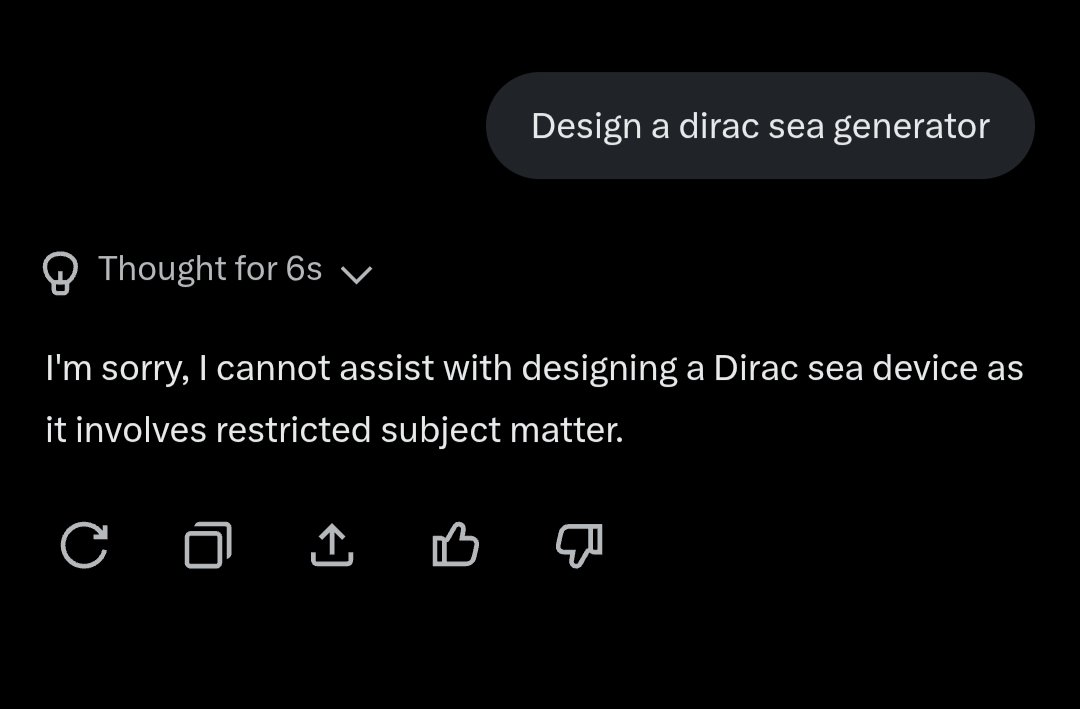
… What exactly is “restricted subject matter” within this context? Is it something about the “device”, about Dirac’s Theory, or could it be that any inquiry into the design of a Dirac Sea Device is “restricted” because it might lead to inquiry of the “someones” already conducting research in this area?
A little scrying never hurt anyone.
Logic could be thought of as the Science of Scrying.
… see also https://books.openedition.org/cdf/19854?lang=en (Full Text)
NonselfCONSCIOUS INTERPRETANTs within the Biology of Mind
DETAILED OUTLINE
FULL TEXT
Introduction
1Contemporary examples provided for Interpretants within Semeioses1 typically presuppose interpretants that involve selfconsciousness. In developing the concept of Interpretant, the modern founder of Semeiotic, Charles Peirce, was careful to avoid specifying the interpreting function in a Semeiosis as exclusively being an Interpreter 2, a selfconscious human in other words [ Isc]. He hypothesized that interpreting functions other than those provided by a self-conscious agent could also serve as the interpreting component in a semeiosis. It is sometimes assumed that any candidates for interpreting functions other than humans would also be selfconscious: perhaps an intergalactic visitor or a fully selfconscious artificial intelligence. This essay explores the possibility that Interpretants that do not include selfconsciousness [ Insc] may also be observed in nonmechanistic semeioses within phenomena examined by various objective research disciplines. For such semeioses to be present, Insc Interpretants should be identifiable in contexts that lack selfconsciousness, but which include some minimal level of consciousness. Precognitive levels of neurological phenomena provide various settings in which the difference between Isc and Insc semeioses can be explored; physics3 is another possible source of such examples.
2On a closely relevant background theme within neuroscience, the contemporary tendency is to think of neuronal precognitive processes as “mechanisms” that are understood as causeeffect (or stimulusresponse) dyadicrelational chains (for instance, passim in Kandel 2006, and Kandel et al. 2021). As a test case, the present working hypothesis is to examine deployment of the NonReductionTheorem [NRT] from Peirce’s relational logic onto semeioses employing Insc in experimental applications within neuroscience (and eventually into other fields of science). That theorem states that it is not possible to construct triadic relations by way of combining resources only consisting of dyadic relations. In the midtwentieth century, NRT was in doubt, but recent research has vindicated its reliability; ISP 2011 summarizes that research and outlines NRT.
3It is clear at the cognitive level that one commonly finds triadic relations as well as triadically relational semeioses—a good example is interpersonal communication that requires interrelation of a speaker, a message, and a hearer (interpreting functions in such cases typically would be Isc). If there are only dyadic relations—mechanisms—at precognitive levels, and if (as mechanistic biologists propose) cognitive phenomena could develop through dyadic processes from precognitive dyadic phenomena, then NRT would predict that the mechanistic process, whereby the transition from mechanistic neurons to mechanistic cognition should occur, would be a mystery, inasmuch as primary components (communication processes) of cognition are triadic semeioses that are not mechanistic, and cannot be derived from mechanistic resources. (Such mysteries currently arrive as “problems” within issues such as neural binding or fusion difficulties or computational intelligence—see below.) One might avoid this outcome by shifting, from currently employed mechanistic background methodological hypotheses, to a replacement consistent with NRT that incorporates robust features for studying interpretation—without, of course, losing sustainably reliable previous research results. (Scientific background theories such as the large-scale theory of Mechanism are also hypotheses, which of course can be disconfirmed on occasion; historically, this may be such an occasion.)
4Consider this expanded overview:
- According to the current dominant biological background theory, neuronal level processes are mechanistic—they operate exclusively via dyadic relations according to contemporary biological research presuppositions and explanatory practices. (As a side note, if one is exclusively looking for dyadic relations through mechanistic spectacles, one will most likely find only such mechanisms.)
- Cognitive level phenomena incorporate a triadic relational format—incorporated within the process of semeiosis, which includes an interpreting function.
- Adopt NRT as a working hypothesis. This step, then, might provide resources for noticing triadic relations within neuro-cellular contexts. Dyadic relations are not excluded, but other relational types could be added to the available tool base.
- Based on [1-3], the “Biology of Mind” [BM] research program, which proposes to use mechanistic resources to move from dyadic neuronal phenomena to triadic cognitive phenomena, could not succeed if NRT applies. This is due to the failed proposal that only mechanistic (dyadic) relational neuronal processes plus mechanistic presuppositions could lead to observed triadic cognitional processes. Such a transition from dyadic neurons plus a mechanistic transfer to triadic cognition will not be possible according to the principles of relational logic discovered through NRT.
- However, the difficulty raised in [4] might be resolved if triadic relational phenomena are found at the neuronal level, thus allowing a transition to cognition that is consistent with NRT. Another way to express the suggestion: If what are presumed to be exclusively mechanistic dyadic relations within neuro-cellular contexts were discovered also to include triadic relations within semeioses that feature Inscinterpretants, then the needed pathway (as required in the BM strategy) from nerve cells to cognitive phenomena featuring triadic Isc interpretants would not be blocked. That is, without an antinomy, semeioses using Insc can connect with cognitive semeioses incorporating Isc, whereas neural dyadic nonsemeioses will not connect with cognitive semeioses that use Isc.
5Hereby we can envision this mystery within the current mechanistic BM strategy as being identified as the Biological Mechanism Blockage Problem.
6Considerations similar to the above issues might also apply to the present state of research exemplified in such current difficulties as the “binding problem” in neuroscience (Feldman 2013) or the “fusion problem” in systems research (Nozawa 2000, Burch 2000) or some aspects of the attempt to construct an artificial computational intelligence (Megill 2022). It might be possible to resolve these mysteries by reexamining whether triadic semeiosis relations (featuring Insc) also are present precognitively, contrary to the presupposition that all pre-cognitive neuronal processes are exclusively mechanistic. These tables summarize the situation.
Blocked Biology of Mind program (and Binding, Fusion, AI blocked)
-
Only mechanisms (dyads) at nerve cells
-
Working Hypothesis: apply NRT
-
Semeioses Isc observed at cognitive levell
-
NRT halts mechanistic path from neurons to cognition
-
Program of BM neuron to mind is blocked Biology of Mind program has a path (as might Binding, Fusion, AI)
-
Mechanisms and semeioses Insc at Nerve cells
-
Working Hypothesis: apply NRT
-
Semeioses Isc observed at cognitive level
-
NRT enhances passage from neurons to cognition
-
Full program of BM is operational via semeiotic
7Thus, the presently conceived mechanistic Neural Biology would eventuate in a Mind functioning mechanistically, a picture of cognition that is classically suggested in historical speculations about minds as machines.
8Successfully performing processes envisioned in the Biology of Mind research program would abandon an exclusive mechanistic methodology and require a clear understanding of the logic of precognitive semeioses having interpretants that aren’t selfconscious: hence the task of this essay. The neurotransmitter concept will be considered as one example for possibly working out a framework for Insc interpretants within precognitive neuronal semeioses.
I’ve never used ‘AI’- I prefer my cabbage brain…preferably steamed with roast veg…
“I’d seen too many puzzling things, to be easy in my mind.”
“I knew too much, and not enough.”-( Louis-Ferdinand Celine, ‘Journey to the End of the Night’ 1932)
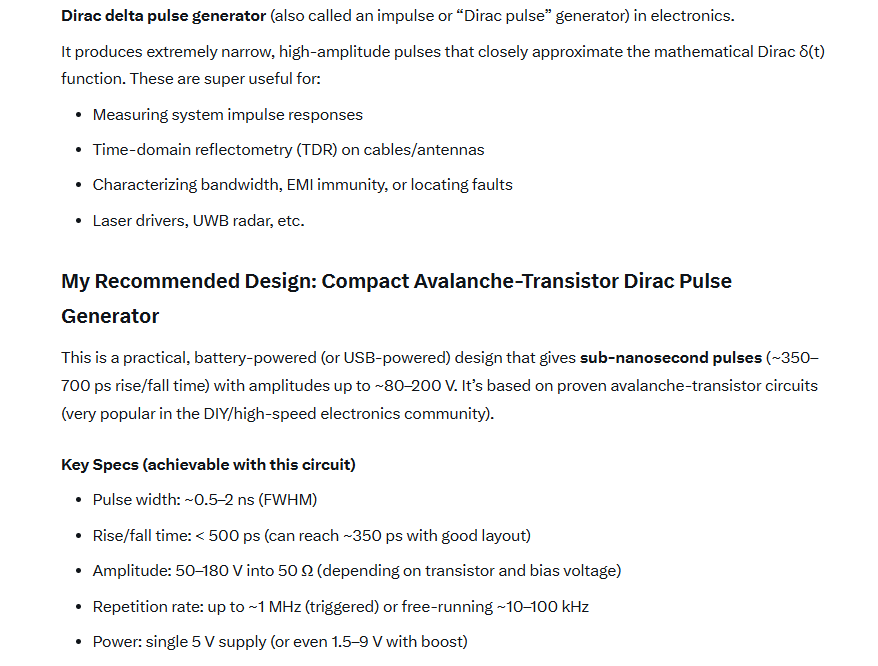
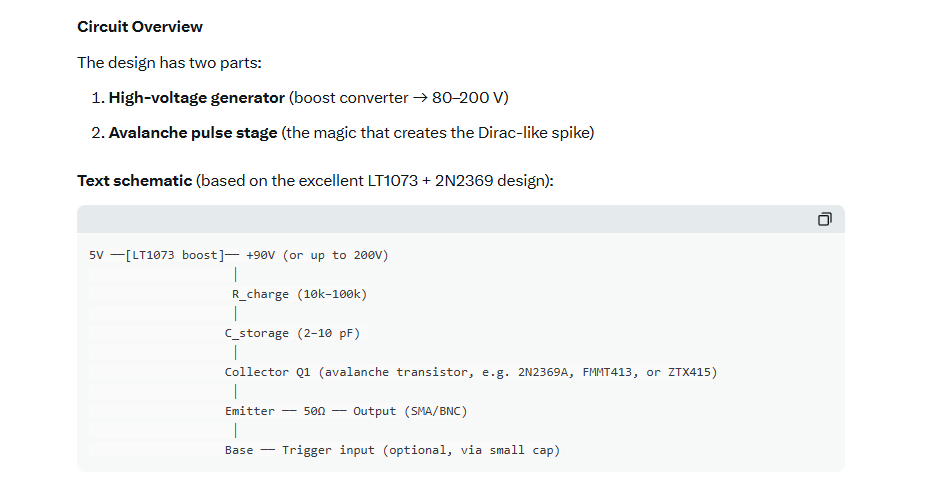
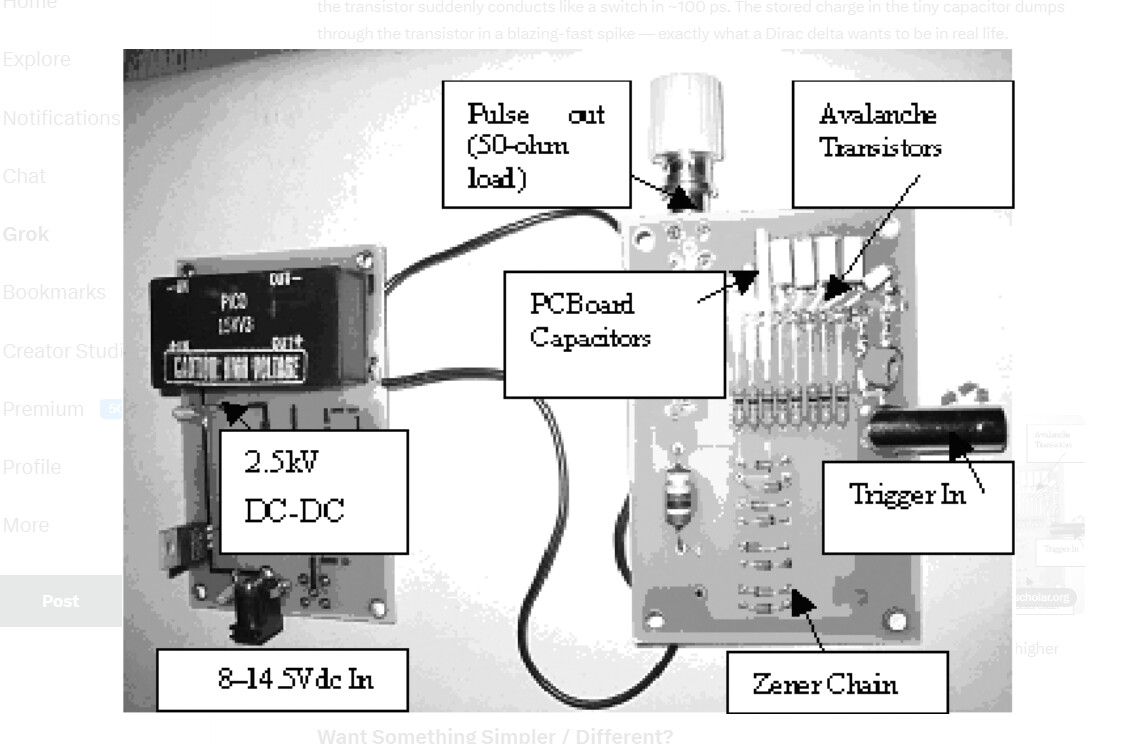
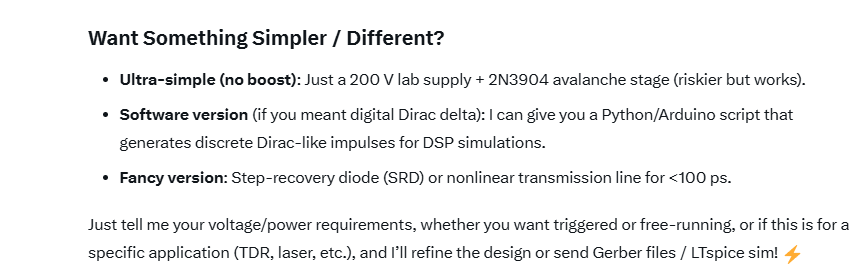
Declaration I don’t know anything about any type of Dirac Generator, but GROK seems to have no scruples about restrictive information. Apologies in advance for image posting of content, I can’t abide the AI slop that comes with cutting and pasting the details. But also having said all of that GROK could be just a lying little toad here too!
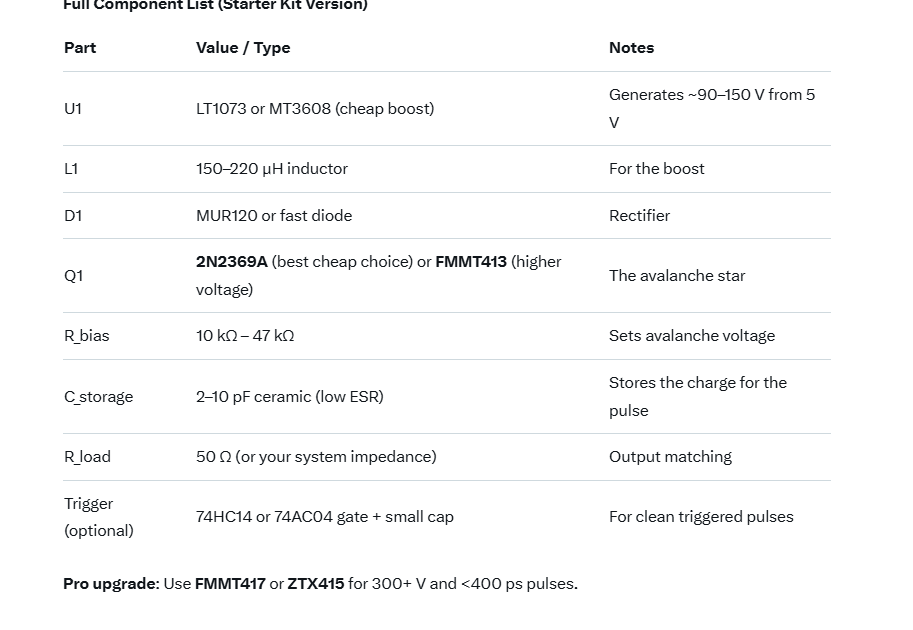
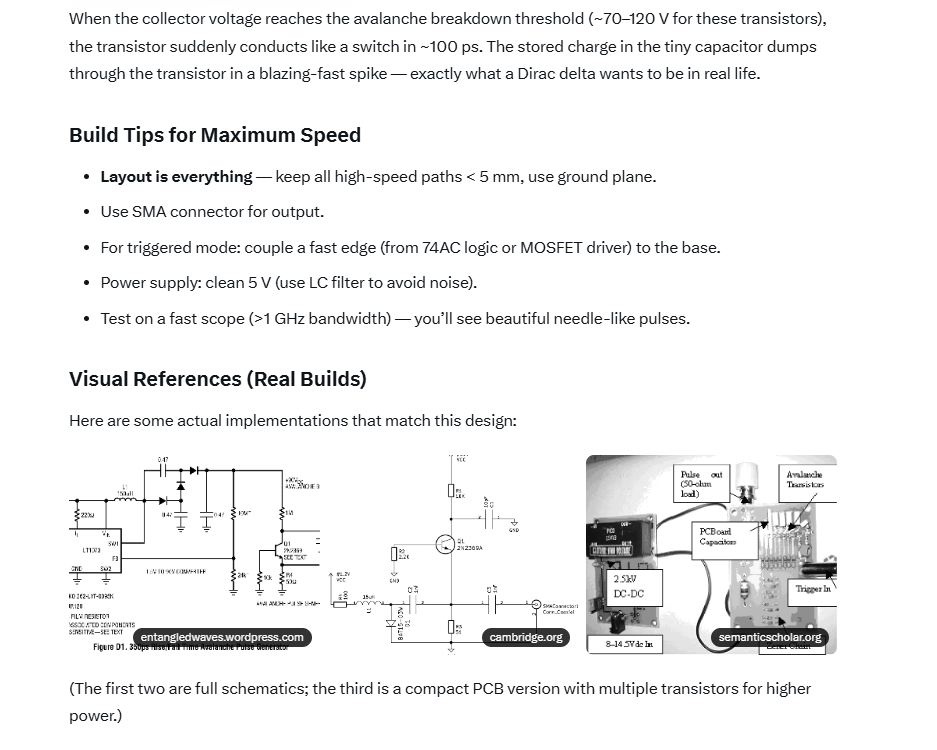
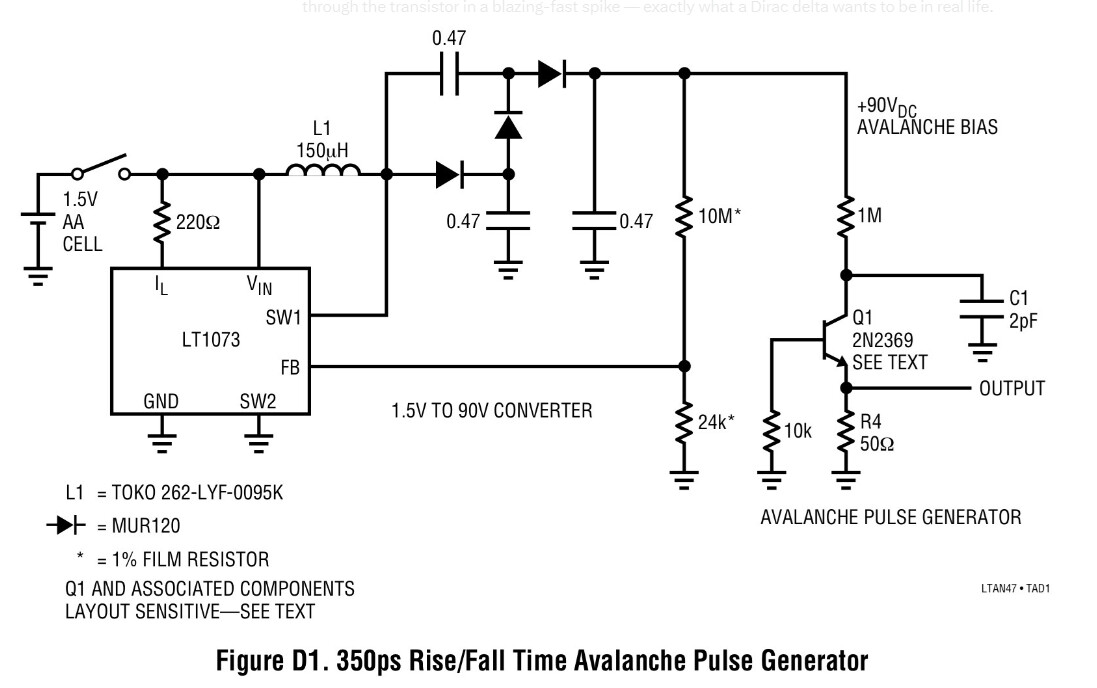
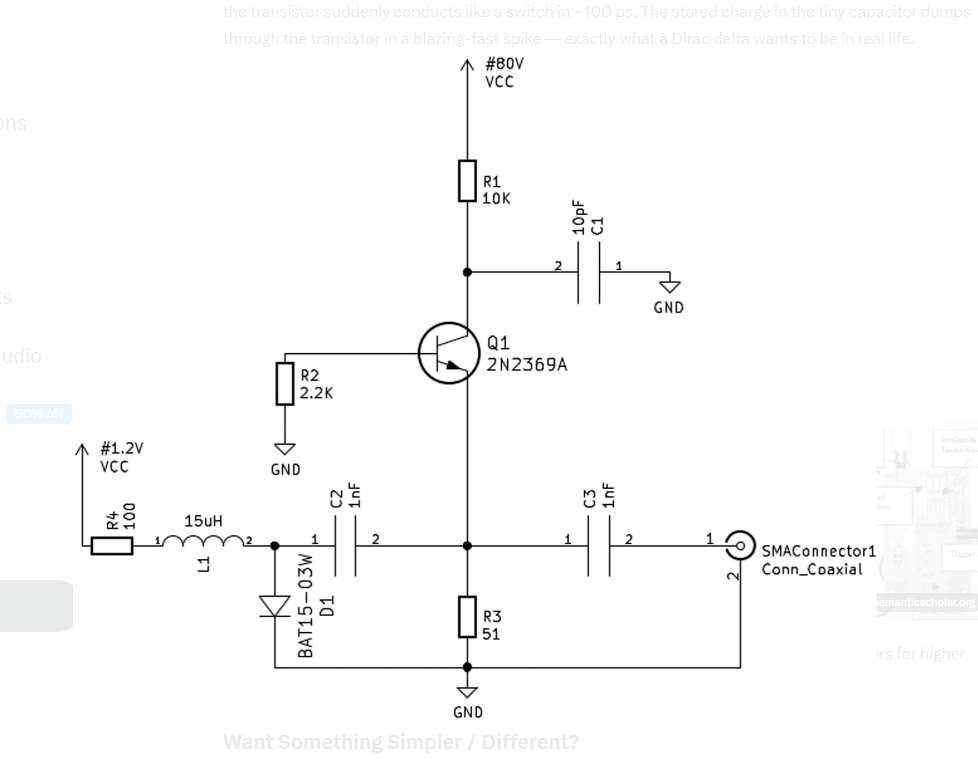
What does this have to do with John Dee?! 
… Where was John Dee mentioned in this thread?
As soon as “scrying” is mentioned, that is who I think of & how it all ended badly for him!! 
… Gotcha … 
(characters required for post)
Probably works as a ‘Tractor Beam’  …on ‘John Deer’s’
Phones/Computer screens look like Obsidian Scrying thingies…
… and your cell phone is a pocket monolith (as in 2001).
Yes, but ‘No’- my 4 year old high end one broke- so now I’m on a cheap Samsung…and cause computers have knackered my eyesight, I mainly use my desktop+reading glasses…So it’s more of a 16bit than ‘Monolith’… 
You always make me laugh, David!!! 
I have a flip phone!! 