
… this situation really needs to be given some thought.
5 Likes
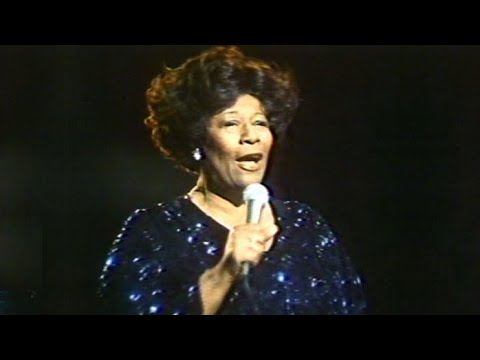
Memorex ad in the1980’s: Is it live or is it Memorex? MTV has come a long way baby….
1 Like
… unfortunately this situation raises an incredible number of much deeper issues than simply being mistaken about an auditory source caused by an improvement in recording technology.
3 Likes
… get ready for new categories … Virtual Racism … Virtual Anti-Christianity …
Virtual Systemic _ _ _ _ _ … fill in the blank with your favorite.
4 Likes
Maybe a new category for the various awards ceremonies, “The best virtual_________”?
Ironic the demand for disclosure and label for AI use in the “creative” process. Fake and the culture war takes on a whole new meaning…
1 Like
I had a conversation with my son (Generation who-Knows-What) today about AI, and his sense was that there was nothing that could be done about it. His job (in mental health - one on one discussion and evaluation) would be gone in a few years as would all other mental health positions. He felt it was inevitable. I begged to differ.
1 Like
"Spiritless machine music’…everyone has their taste but in my accidental tuning to the odd Christian radio station that was my gut feeling about all of it. But that said, perhaps it should be so as has been said by many artists over the years; you have to sell your soul to make good rock and roll music. Many, including myself at times, eschew listening to old rock as a means of keeping that spirit away.
AI can create some pretty good sounding elevator music. I guess AI hasn’t signed the contract with the devil yet (or has no soul to sign over) to make top 40 rock music.
4 Likes
Wikipedia defines gospel music this way (emphasis mine):
“Gospel music is a traditional genre of Christian music and a cornerstone of Christian media, characterized by dominant vocals (often with strong harmonies), lyrics that reflect Christian teachings and values. The creation, performance, significance, and even the definition of gospel music vary according to culture and social context. Gospel music is composed and performed for many purposes, including aesthetic pleasure, religious or ceremonial purposes, and as an entertainment product for the marketplace.”
I think a fair amount of those who call themselves “believers” would take exception to the two highlighted above. It was a pleasant surprise to find them included; they help make my point.
PERPETUAL MUSIC BATHING
Recorded music for the masses has only been around for some one hundred years now, plus or minus. Prior to that, the song ended when musicians stopped strumming, singers pronounced the final lyric or when grandma finished humming in the kitchen. Music wasn’t omnipresent like it is today. One of many reasons I hate shopping today is the inescapable presence of blaring (so-called) music. (Oh, yes, I do sometimes answer to the title of “curmudgeon”.)
Music, now coupled with video, saturates the world and permeates our minds. Victrolas playing 78rpm vinyl (e.g., “Yes We Have no Bananas”) in the 1920’s gave incremental rise to radio music programs, movie scores, televised concerts, MTV, iPods, Pandora and beyond. Worldwide, music genres are innumerable and most of them be had in our earbuds with a finger swipe. Silence is hard to find. And when we do find it, the songs can still reverberate between the ears. Noise pollution has been normalized.
THE MUSICAL APPEAL
Humans do not make perfect music. Even the best singers are off-pitch, if just a little bit, and each iteration is a bit different. Same for musicians. This guitarist on YouTube analyzes vocal performances using filtered audio waveforms.

I am not musically gifted be it voice or instrument, so I appreciate the graphic evidence he presents from talent such as Judy Garland, Freddie Mercury, Barbara Streisand, etc.
Unfortunately, his more recent videos reveal chronic presence of autotuning. Sound editing technologies like auto-tune and pitch-correction can make mediocre performers sound perfect with most listeners totally unaware. And to his point, it also masks natural voice variations (like a cry) when deployed against a good singer like young Lucy Thomas. That was me until I came across his channel; I didn’t know all this was being done.
Musically, I found the Solomon Ray song enjoyable. The rhythm, the melody, background vocals and holding of notes appeals to me; I understand why it is popular. Had I heard it before the AI pronouncement, I would still ascribe bias (thank to Wings of Pegasus) that such perfect sound elements were digitally-enhanced/fabricated.
THE LYRICAL APPEAL
From the Modernity article above (emphasis mine):
"Singer Colton Dixon urged “I’m honestly still wrestling with the whole AI music thing. Can it be a tool to speed up a rather long tedious process – yes. But can it also be used as a crutch instead of finding inspiration and direction from Holy Spirit – also yes. I’m believing God will be magnified regardless.”
I think Coulton got the first two right, but not necessarily his conclusion. For many in the Christian world, gospel songs like this one are authentic praise songs. Websites like klove.com promote a wide variety of gospel performers reach millions daily. I do not know the minds and hearts of these listeners any more than I do of this Coulton fellow. Nor do I know the extent of grace and mercy of God except what I’ve learned through the Bible.
But my radar is always up when cultural trends outside the church are embraced within and by those claiming to be Christian. Worship in many services today is more of a spectator event too much resembling a concert than irreverent praise for God. Choreographed performances limit audience expression. Is God really being praised? Is He really being glorified? Wheat and tares are not limited to the pulpit. Wolves don’t dwell only among elders and deacons.
To those who are upset about the artificiality of the Solomon Ray hit, I wonder if they think twice about the legitimacy of gospel songs written by humans or even, dare I say, what those artists believe and advocate? What doctrines do these performers adhere to? What movements, if any, do they support? “It’s OK; it’s just a song.” Should musical appeal be the only criteria for one to keep listening, buying, or subscribing to it? Should worship songs be listened to in the same manner as pop music on the radio? Much less, should believers be worshipping with it? Is it inspired by the Holy Spirit?
Are the naysayers are more upset about being fooled by AI this one time than by the implications of what the technology will do over time? I think is part of what Scarmoge was getting at.
Music is a such fantastic way to cull the masses. Just look what rock and roll did.
.
.
.
.
Or was it Maxell?

Gosh, there was a video of this??? How cool!
Maxell Tape Ad (1980s)
3 Likes
I remember the brand, cassette Maxwell tapes as competition for Memorex.
1 Like
wholeheartedly agree on the ‘perpetual music bathing’ comment. It’s to the point when I go to the hardware store and am looking for that specific bolt/nut or trying to pick out combinations of plumbing fittings I have to either use earplugs or stick my fingers in my ears.
I fairly often have to ask the waitress to have the music turned down to be able to tolerate even 45 minutes it takes to be served eat and get out of the assault on my ears.
I just smile to myself at the irony of hearing disco music in the morning at my local supermarket with a flashback to my party days. Can’t imagine being an employee, as a customer I get to leave.
1 Like
… in front of JBL 100s in case anyone is wondering. 
Ah yes … Sparks and Nikita (early version of La Femme Nikita)
Sparks asks Nikita what her favorite music is. Nikita says she doesn’t listen. “Music evokes emotion,” she says.
Sparks: Emotion spawns genius.
Nikita: Emotion blurs judgment.
I had four JBL car speakers in my 1979 Mustang in the 80’s along with an amplifier to drive them. Bruisin cruisin…
1 Like