
4 Likes
… and the plan is what when the grid either fails or is turned off?
3 Likes
Yeah, I know it doesn’t go that far…but, still an interesting alert against not owning anything…
Descriptive Summary: The Value of Physical Media and Skepticism of Digital Ownership
https://www.youtube-transcript.io/videos?id=7Hph0VSdh9w
Intro
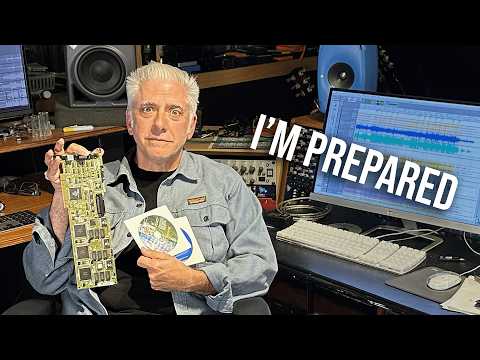
In a candid monologue inspired by a recent RIAA statistic, Rick Beato wrestles with a provocative paradox: while CD sales surge by 58.7% this year, the digital landscape promises convenience at the cost of ownership. He grounds his argument in a tactile, deeply personal archive of physical media and hardware, arguing that owning media in physical form offers irreplaceable security against data loss, manipulation, and the eroding concept of ownership in a streaming-dominated world. This summary distills Beato’s core claims, his living museum of formats, and his warnings about AI-driven data practices, while offering a structured reflection on why preserving original media matters.
Center
Beato begins by situating himself as a collector whose life revolves around music and media, not merely consumption. He presents a vivid inventory of artifacts that illustrate a lifelong commitment to preservation across formats. The central thesis is simple but powerful: physical media and the devices that play them are not just nostalgic artifacts; they are reliable custodians of cultural artifacts, offering a resilience that digital streams cannot guarantee.
Key themes, organized for clarity:
- Ownership versus access: CDs, vinyl, cassettes, DATs, and microcassettes are tangible property that remains under personal control, independent of subscription models.
- Durability and longevity: physical formats such as Blu-ray data discs (claimed to last 100 years) and rewriteable CDs have proven, in his experience, to endure decades with proper storage and care.
- Archives and archiving habits: Beato shows meticulousness in preserving not only the items themselves but also the playback equipment, from CD players to older Mac hardware and Pro Tools sessions from earlier software eras.
- Cross-format continuity: He demonstrates how different media complement one another, with a full life cycle of formats from analog to digital, preserving the nuance of the original sound and its context.
In a tangible display of commitment, Beato enumerates his holdings, including:
- Thousands of LPs and vinyl records, spanning back to the early 1970s.
- Cassettes and microcassettes, including tools for capturing guitar ideas and song sketches.
- DAT tapes, rewritable CDs, and standard CDs, along with related players.
- A Blu-ray data disc collection, and a hardware setup capable of burning discs with an ASUS burner.
- A historical hardware library, including a G4 Macintosh running OS 9.2 and Pro Tools 5.1, illustrating a living bridge to earlier production workflows.
Beato emphasizes that this ecosystem is not hoarding but deliberate preservation, driven by a belief that original media—the first-ever issued master, approved by artists and engineers—represents the authentic artifact. He argues that remasters and streaming versions can distort or obscure the original sound and the intent behind it. The central claim is that owning the original CD, or the original vinyl pressed at the time of release, ensures access to an “actual version” that has endured as intended, rather than a later alteration or reinterpretation.
Beato’s critique of modern digital ecosystems centers on ownership and control:
- In streaming, ownership vanishes; you pay for access as long as the subscription exists, and music can vanish if service terms or payments shift.
- In contrast, owning a disc or a tape preserves both content and the contextual fidelity of the original release, irrespective of future platform policies or corporate decisions.
- He notes the unsettling trend of AI-driven consolidation, where digital content can be manipulated, remixed, or rewritten, raising concerns about the integrity of information and artistic intent.
IV. The risk of data loss and AI influence:
- Beato warns about a future where digital data could be altered or erased by systemic processes, driven by AI models that ingest vast swaths of content and then generate new outputs. He uses stark imagery—AI “slot machines” or “slop machines”—to convey how easily the original material could be distorted or replaced.
- He warns that books are being scanned, their spines removed, and the content repurposed—an allegory for how vast data sets could be transformed without accountability. This caution expands to music, videos, and personal media, where the integrity of the original artifact may become precarious in a digital-only world.
V. Practical advice and a call to action:
- Invest in a physical media player if possible, because hearing a CD or a vinyl pressing in its original form can reveal sonic details that digital streams may obscure or alter.
- Back up and preserve both media and hardware. He urges readers to maintain their archives, including the devices that enable playback, to guard against loss.
- Consider the potential for AI-driven data manipulation and the uncertain future of digital-only ownership. By maintaining physical copies, individuals retain a more stable reference point to resist eroded authenticity.
Center: Comparative reflections and illustrative highlights
To illuminate Beato’s argument, consider the following concise comparisons between media realities:
-
Physical CD vs. Streaming Music
- Ownership: CD purchase equals a tangible asset you own; streaming is a service that can vanish.
- Sound fidelity: A CD, when played on a well-maintained player, offers an unaltered original mastering; streaming can be subject to encodings, remasters, or compression.
- Longevity: With care, CDs can last many decades; streaming depends on platform continuity and data integrity.
-
Vinyl vs. Digital Remasters
- Originality: The first pressings reflect the artist’s and producer’s initial intent; remasters may reinterpret or alter those choices.
- Collectibility: Original formats often retain higher resale and cultural value for collectors.
- Experience: Physical media provides a ritualized listening experience that many fans associate with a deeper connection to the music.
-
Data Security vs. Data Fragility
- Physical media stores data independently of external infrastructures; offline storage reduces exposure to cyber threats and corporate policy shifts.
- Digital data lives on servers and devices that may be altered, migrated, or decommissioned, risking “digital amnesia” if backups are incomplete.
Table: Beato’s Core Assertions
| Theme | Physical Media | Digital/Streaming |
|---|---|---|
| Ownership | Direct, long-term possession | Conditional access, subscription-based |
| Durability | Long-lasting with proper care | Prone to platform changes and data loss |
| Authenticity | Original masters and formats preserved | Susceptible to remasters and edits |
| Access | Independent of networks | Requires connectivity and platform availability |
| Preservation | Requires maintenance of hardware | Requires ongoing data governance and rights management |
Outro
Beato closes with an earnest appeal to nurture a culture of preservation, urging his audience to consider the fragility of our digital era and to recognize the value of physically rooted media. He shares a reflective stance: he is not anti-technology, but he is wary of the potential for AI to rewrite our informational landscape, erasing historical context and compromising the integrity of original works. He emphasizes that his own life has been an archival mission, preserving media across formats, eras, and devices—an ongoing project that dignifies the music and its creators.
He invites dialogue, asking for readers’ thoughts and experiences, and encourages viewers to subscribe for more discussions on music, technology, and media preservation. The message is clear: in a world where access to digital content can be ephemeral, the materiality of media provides a stabilizing anchor. By maintaining physical formats and their playback ecosystems, we safeguard a tangible lineage of art, sound, and memory—a lineage that AI and platform shifts cannot easily rewrite.
In summation, Rick Beato presents a compelling defense of physical media as a durable, meaningful, and historically important mode of cultural preservation. His expansive personal archive, spanning tens of formats and decades, serves as a living testament to the enduring value of owning authentic artifacts. The core takeaway is not nostalgia for its own sake, but a practical, forward-looking strategy: safeguard the originals, maintain the hardware, and approach digital abundance with a wary awareness of ownership, integrity, and the evolving power of AI.
Thank you for engaging with this descriptive reflection. If you found relevance in Beato’s perspective, consider sharing your own experiences with preserving media, your thoughts on ownership in the streaming era, and how you plan to balance consumption with preservation.
1 Like
Hey @ruigrazina, thanks for posting this! I do watch Rick’s show every so often, but hadn’t seen this clip. Sadly, I got rid of a lot of things over the years including old vinyl that I sold in the early 90’s for 25¢ each (and now buying them back for $40 each! Who would have known!). I got rid of my cassettes, 8-tracks, and lots of other things all in the name of “decluttering”. Fortunately, I still have a good cassette deck, CD player, Blu-Ray, and turntable. I’m not a horder either, but I’ve broken out of the “declutter” mentality and I’m very selective about what I keep and pitch now. I got caught in the Kindle trap for a little while, but have long since returned to printed books.
Dr. @Scarmoge, I hear you and even if the grid failed or we got hit with the ever-promised EMP, I believe that we would build back and their software cannot run without hardware. The hardware would still need to be rebuilt for any of their “projects” to work.
My fear isn’t so much the older people, but this young generation that thinks all things digital is life Itself. I mentor young engineering interns at work every year and do my best to inject a virus into the hive, but I’m only one person and it needs to happen on a much bigger scale.
3 Likes
With the modern globalist push to nudge everyone into “tiny houses”, my thought has been:
Where are you going to put your personal Library, your Books, your Musical Instruments, your Arts & Crafts room, your Musical and Art artifacts? (And for me, as well: where are you going to put accoutrements for the preparation of health-promoting meals and preserves.)
I’m not into “monster homes” – but the “tiny home” craze is just not practical for people who do value having access to artifacts like CDs and books, etc. We still listen to CDs (and purchase CDs of older musical styles in Thrift stores) and are glad we kept our CD player!
2 Likes
… I believe we were told that we would own nothing. And obviously we will not need space to prepare zee bugs. House? Do you think we will be allowed to have a house (even a tiny house)? Just like there is no crying in baseball …there are no houses in concentration camps.

3 Likes
If you repeat this often enough (and yes, zee what-his-face wants you to serve as his personal repeater system), then, unfortunately, people will be flocking to Canada to que up in the maid lineup.
I would rather that people do put effort into finding and securing an appropriate-sized home for their life purposes (which they define for themselves, instead of having it defined for them by zee who-knows-whats) and get CD players instead of cell phones, and listen to CDs instead of the radio, and then go out to live concerts and support the musicians. And, while they’re at it, why not even take up learning a musical instrument or a new language, instead of listening to the crap coming over air waves.
1 Like
I would like to buy a solar generator and a gas and propane generator.
1 Like
Of course the best entertainment needs no human power source to enjoy. Books and sunlight
3 Likes