The Living Glass That Should Not Exist!
LIVING GLASS.
It is almost impossible to believe this mostly glass thing is alive.
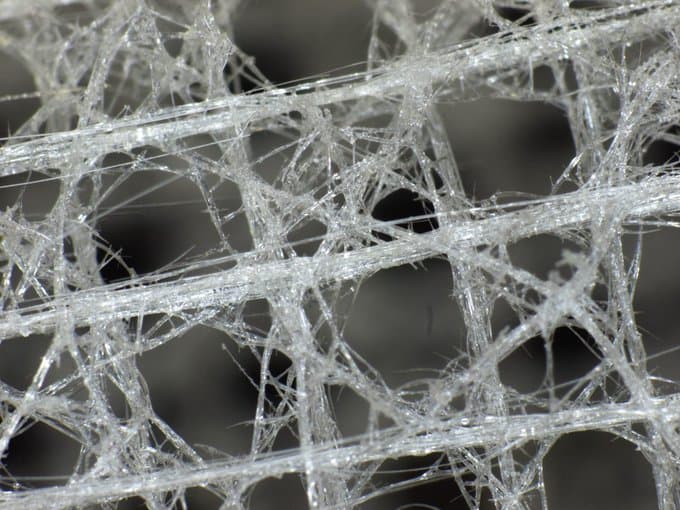
In the black of the deep ocean,where no sunlight reaches, stands a creature that looks like a sculpture stolen from a crystal cathedral. Its body is a lattice of pure silica—glass spun by living cells from seawater itself.
Translucent. Rigid yet flexible. Delicate as spun sugar, yet strong enough to endure for millennia in one of the most hostile environments on Earth. This is the glass sponge. And it is very much alive.
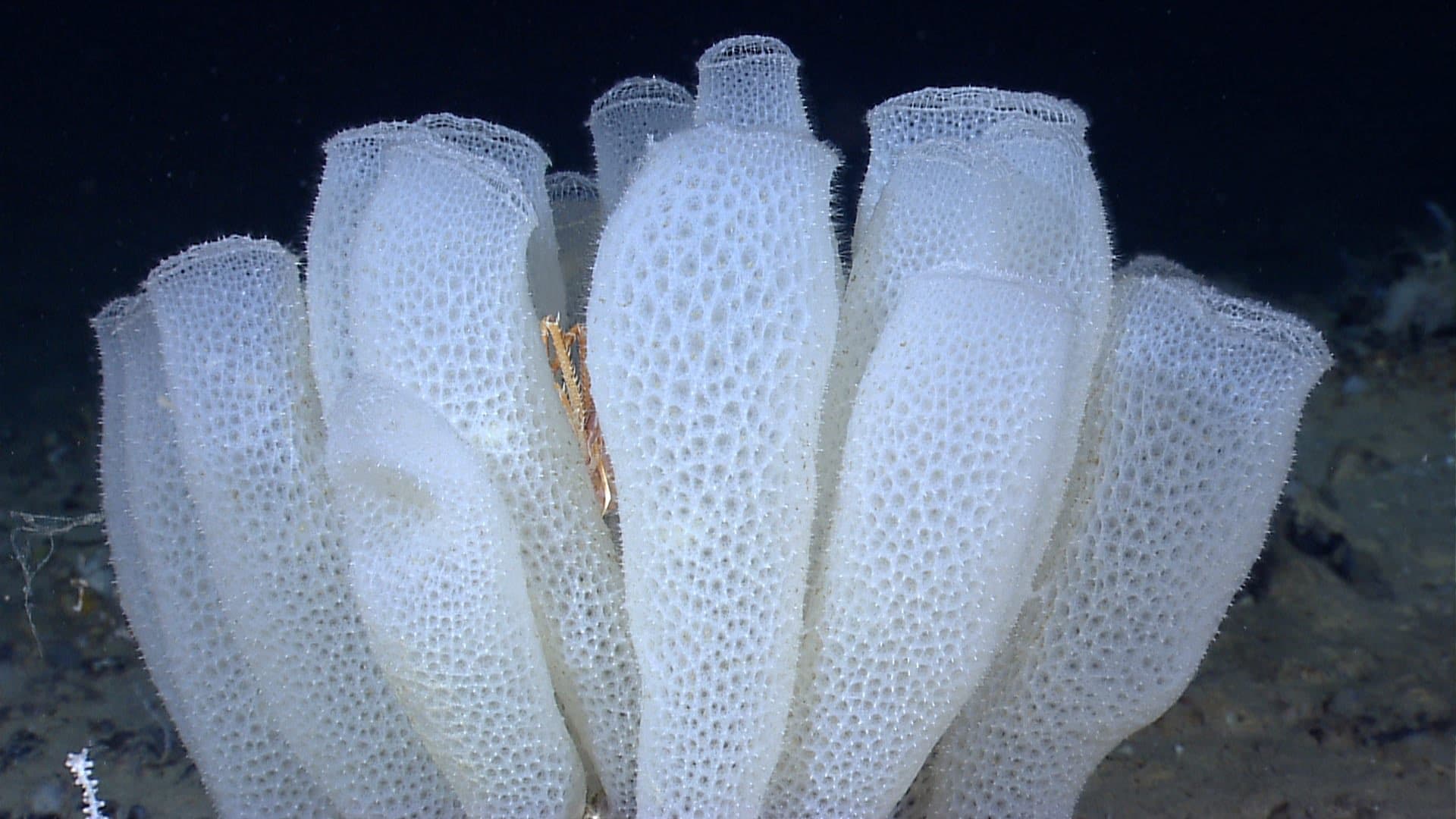
Look closely at the Venus’ flower basket, Euplectella aspergillum, the most famous of these animals. Its tubular body rises like a delicate vase or basket from the seafloor, woven from six-pointed glass spicules fused into an intricate geometric mesh. Water flows freely through the open lattice. A thin living tissue clings to this crystalline framework like a living veil. The whole structure is mostly glass.
Yet it feeds. It grows. It responds. It lives.
These animals belong to the class Hexactinellida. Their skeletons are not calcium carbonate like corals or bone. They are silica—the same material as ordinary glass—extracted from the ocean and assembled with astonishing precision. The spicules form hierarchical structures from the nanoscale up: concentric layers of silica separated by thin organic films, square lattices reinforced by diagonals and helical ridges. Engineers study them in awe. The design reduces drag from deep currents, creates internal vortices that help the sponge feed and reproduce, and gives the brittle material remarkable toughness and flexibility.
Most glass sponges live deeper than 500 meters. Some have been found beyond 7,000 meters in the hadal zone. In the cold, high-pressure dark they grow slowly—sometimes for thousands of years.
One specimen of a related species has been modeled at ages approaching 15,000 to 23,000 years, placing glass sponges among the longest-lived animals known.
Their tissues are largely syncytial: vast multinucleate sheets rather than discrete cells. They can even conduct electrical signals across their bodies without true nerves, allowing them to shut down feeding when sediment threatens to clog their delicate filters.
Many Venus’ flower baskets house a lifelong pair of shrimp.
The tiny crustaceans enter as juveniles, grow too large to leave, and spend their entire lives cleaning the glass lattice while the sponge provides shelter and food.
In some cultures the dried skeleton, with its trapped couple, is given as a wedding gift—a symbol of eternal partnership sealed inside living glass.
Other glass sponges take different forms: frilly white clouds, stalked goblets, branching structures that create entire gardens on the abyssal plain.
Their silica spicules can transmit light better than some man-made optical fibers. The same architecture that lets them stand against deep currents is now inspiring stronger, lighter materials and better building designs.
It is almost impossible to believe. A living thing whose body is mostly glass. An animal that builds fiber-optic architecture. A creature that can outlive civilizations while anchored in eternal night.
Yet here it is—translucent, silent, filtering the dark water through its crystalline body, proving once again that nature’s most elegant solutions are often the ones that look least possible.
The glass sponge outlast empires, some are over 10,000 years old.
It is glass that breathes.
And it has been doing so, unseen, for longer than we can easily imagine.