For thousands of years, the Spanish Mastiff has been bred to guard sheep against wolves. They are incredibly noble and loyal creatures that will give their lives to protect the flock.
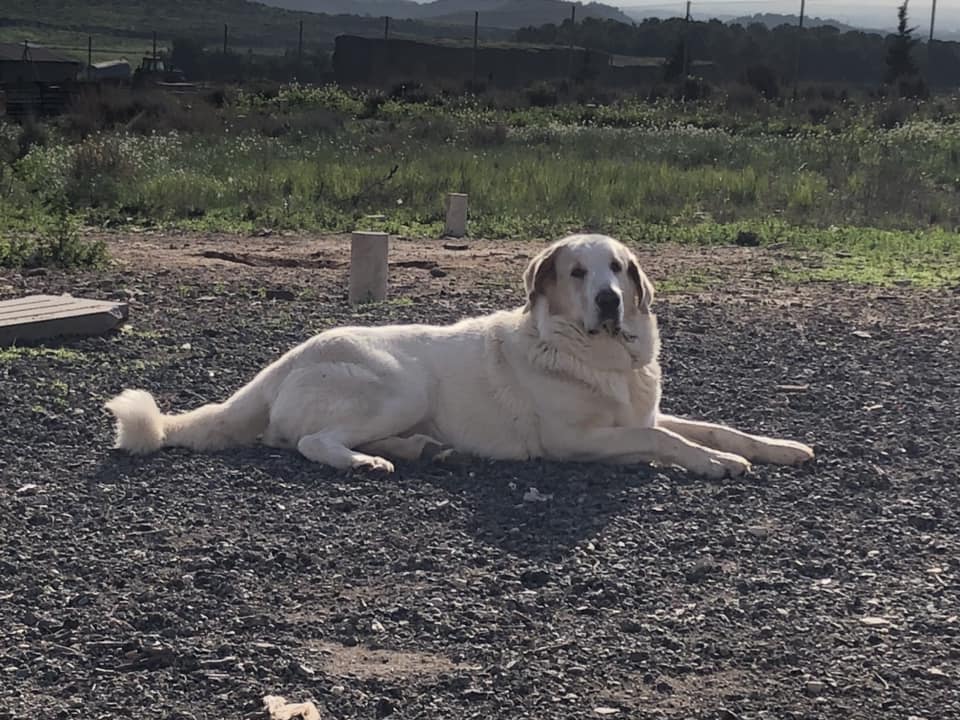
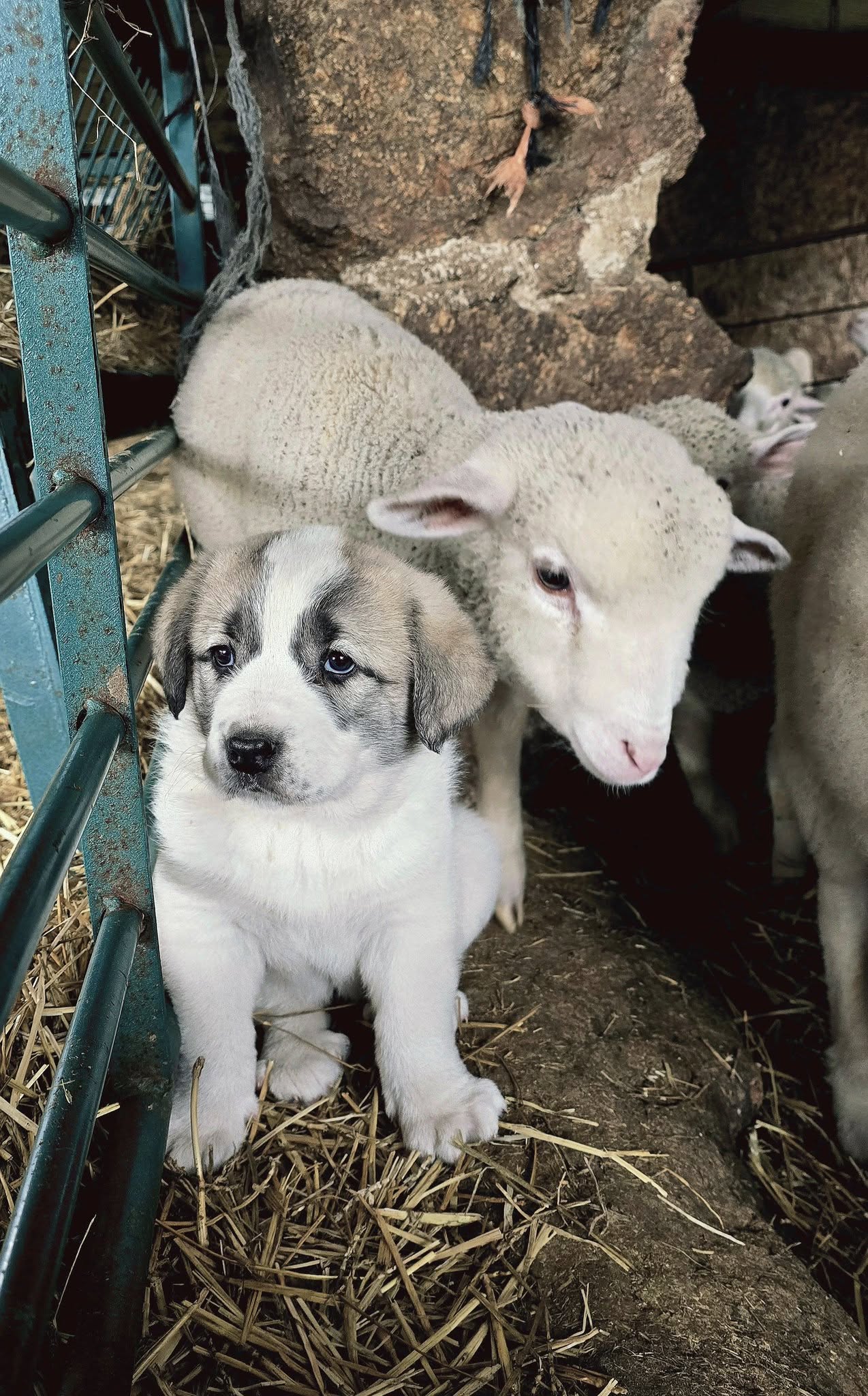
What makes these dogs so loyal? Psychologically, the Spanish Mastiff believes it is a sheep. This is due to a process called “troquelado” (imprinting), where the guardian dog is raised from birth to identify completely with the flock.
From the moment they are born, the puppies are placed among the sheep to bond through scent. When they are one or two months old, they begin to interact with the ewes, who will often gently head-butt the puppies. This behavior teaches the young dogs the boundaries and dynamics of the flock, integrating them into the social hierarchy. As they grow, they spend their entire lives with the flock, guarding and protecting them as their own.
My family has lived in San Juan Bautista for almost 500 years. My great-great-great-great-grandfather was a knight who arrived here with the first colonizers. Genetically, I am 99.9999% Spaniard. I could go to the Spanish consulate tomorrow and claim citizenship—it is my birthright. And yet, I choose not to. Why?
Because I am an American.
Not because of the U.S. Constitution. Not because I’m an American citizen. Not because of ideologies. No, no, no.
I am an American because I am bound to this land. This is where my loyalty lies. It is primal—pre-rational, pre-Masonic, pre-republic. My roots here run deeper than those of George Washington or the passengers of the Mayflower.
In Spenglerian terms, this is a matter of people and soil. You see, I am troquelado —imprinted—to this earth, to this part of the hemisphere. There is no grand intellectual reason. There are no mega-mind explanations.
It is simply the land. And I belong to it.
In Spenglerian terms, the very concept of dual citizenship is a hallmark of late-stage civilization—a sign of the weakening of primal, organic ties between a people and their soil. It represents the triumph of abstract, legalistic constructs over the pre-rational, imprinted loyalty that defines authentic cultural being. Where a man is troquelado —irrevocably stamped by his land, like the Spanish Mastiff with its flock—his belonging is singular, total, and sacrificial. To fragment that loyalty into multiple, convenient legal identities is to prioritize the cosmopolitan, mercantile mind over the rooted soul. It transforms citizenship from a blood-and-soil destiny into a negotiable commodity, a symptom of a civilization that has traded its living myths for administrative paperwork and its sacred hearth for a portfolio of passports. Thus, dual citizenship is not merely wrong; it is a metaphysical betrayal, a clear indicator of a culture that has entered its winter, where contractual convenience replaces the deep, mythic bond that once bound a people to their land.
We should not tolerate dual citizens, inside or outside of government—period. If I, whose bloodline is woven into this soil for centuries, have remained as true and loyal as a Spanish Mastiff to its flock—singular in devotion, imprinted to this land alone—then no one serving in our government should hold divided allegiance. A nation is not a hotel; citizenship is not a convenience. If you believe Israel, or any other nation, is so uniquely special that it commands your secondary loyalty, then you have a clear path: go, live there, and pledge your service—join the IDF, swear their oath, and root your destiny in their soil. That same standard applies to dual citizenship with any foreign power. Governance demands an undivided heart. In the sacred calculus of a people and their soil, there is no room for split sums.
This is the heart of my problem with the United States: its founding logic is a Babylonian-Masonic fiction. It forces the living, complex truth of a people—their history, their land—to conform to kooky, grand abstractions cooked up in lodges. Common sense always loses. The other day, wrote a long one about the Morphology of History applied to Hispanic America. We are descending into fellaheen territory. Look at the picture I posted of the Temple of the Sun in Peru. That is what we should be aiming for because it represents the spring time of a culture, the vital energy, our history, our reality, our soil, our creations.