
Originally published at: VIDEO BLOG: HOW TO HAVE AN A.I. FINANCIAL APOCALYPSE
Podcast: Play in new window | Download (Duration: 16:59 — 27.2MB) Today’s video blog references the following article: AI could cause global economic downturn, Bank of England governor tells G20
4 Likes
Random comments on this Vlog
AI removes from the financial system what William F. Ogburn called “Cultural Lag”.
… on this very subject see The Quants: How a New Breed of Math Whizzes Conquered Wall Street and Nearly Destroyed It. by Scott Patterson
… speaking of the art of British understatement … if you want a great piece of comedy on the British tone applied to bad news delivery see Christopher Titus’s The 5th Annual End of the World Tour where the BBC announcer calmly reports the coming apocalypse.
4 Likes
“Most Advanced AI’s” - admitted to.
Throw in the Chinese, Russians, Zionists, and Nazi International…
Along with these automated AI’s - with individual agency…
AND, one has the recipe for financial CHAOS!
Then it becomes trying to separate the purposed black-op chaos…
From the unCONTROLLED chaos…
AND, the CONTROLLED chaos.
Maybe even; an off-world player, throws in their two cents?
The RIGGED MARKETS just realized - things may NOT Play-Out…
Odds wise?
This would be divine humor.
By 2027, the US could reach US$1.4 trillion on spending on AI. Chips, data centers, power and networking.
To fund it, they’ve already borrowed more than US$400 billion this year.
Look at previous investment manias: of the 1840s, America’s canal boom, the Roaring Twenties and the dotcom bubble.
History repeats itself.
But this would be the first time in history that the area where the boom occurred, AI technology, will be the same technology that triggers the crash.
Hadn’t thought of that angle. Quite poetic actually.
1 Like
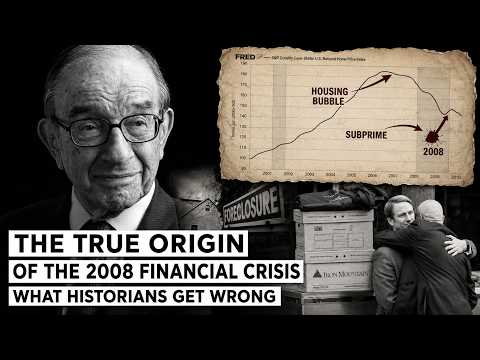
… in light of today’s Vlog a story worth revisiting, we are now witnessing the story of 2008 and instead of Mortgage Backed Securities, Derivatives, and bad (intentional) legislation the same system is being constructed using the AI Boom instead. And as last time many will suffer and a few will benefit incredibly. Interesting that all of the principles involved FAILED UP. One of them, probably more than just this one, was an Epstein Man - Larry Sommers. Out of the 2008 crisis he failed up, became President of Harvard and was able to continue his perversions
There was one hero in all of the 2008 bubble collapse. Her name is Brooksley Born. She was in charge of the Commodity Futures Trading Commission, she saw what was coming, tried to prevent it and was silenced.
… see also The Big Short by Michael Lewis
1 Like
Let’s talk about Leopold Aschenbrenner incase you missed the BOOM!! More like a THUD

He is a former OpenAI employee. “Superalignment Researcher”. His job was as an AI safety scientist who studies how to control, steer, and keep safe future AI systems that might be much smarter than humans. As such, he was seen as something of a prophet of the AI revolution.
So, of course, he set up a hedge fund to help people (and himself) make money. Altruistic young lad.
He convinced the smartest people in the room that he had the inside track, the brains, and the stomach to bet everything on the future of AI infrastructure. Sounds very ambitious, doesn’t it?
This highly touted hedge fund, Situational Awareness, was supposed to be the undisputed vehicle that rode the AI wave straight into the stratosphere.
It initially raised $100 million from investors when it launched in late 2024. It later anchored a massive $1.6 billion capital raise in June 2026.
It worked well for some time. He made bigger and bigger bets. And more and more money. At least on paper. Well, he would, wouldn’t he? He was the prophet of the AI boom so there was no risk.
Until last month, that is, when it came crashing down.
You really can’t make this stuff up.
We are talking about a massive 67% loss in July 2026 alone.
A staggering $35 BILLION in paper wealth—vaporised into thin air in a matter of days.
The sheer scale of the carnage is breathtaking. Aschenbrenner took a massive, concentrated bet on AI infrastructure —piling billions into companies like Micron, SanDisk, TSMC, and NVIDIA – and juiced those returns with insane amounts of borrowed money.
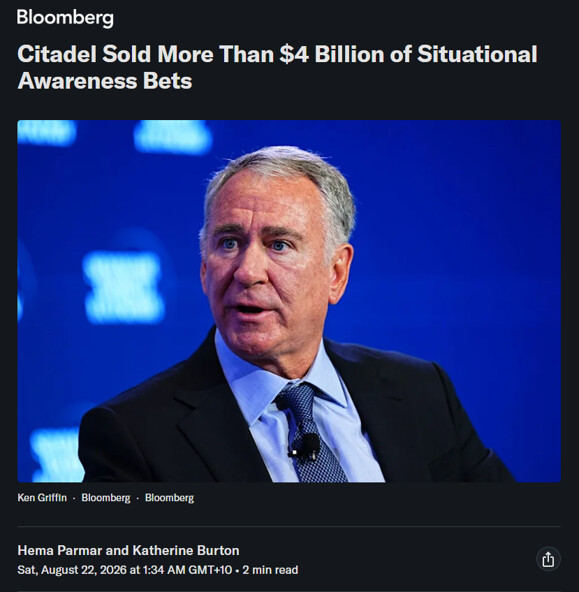
It got so bad for Aschenbrenner that he was forced into a humiliating emergency fire-sale of his $16 billion public stock portfolio to Ken Griffin’s Citadel just to appease the Wall Street banks hat that came knocking at his door to post more margin.
He was so loaded that he promised to buy his wife a galaxy
Citadel acquired all their public equity stock at a 10% discount and have already begun spinning it off for a large profit as markets have recovered.
The sheer scale of the carnage is breathtaking. Aschenbrenner took a massive, concentrated bet on AI infrastructure —piling billions into companies like Micron, SanDisk, TSMC, and NVIDIA – and juiced those returns with insane amounts of borrowed money.
It got so bad for Aschenbrenner that he was forced into a humiliating emergency fire-sale of his $16 billion public stock portfolio to Ken Griffin’s Citadel just to appease the Wall Street banks hat that came knocking at his door to post more margin.
Citadel acquired all their public equity stock at a 10% discount and have already begun spinning it off for a large profit as markets have recovered.
He was sending letters out to his investors, practically begging for MORE capital.
He had the nerve to tell them the tech pullback was one of the “most attractive entry points” in over a year. He thought he was invincible. But the market? Let’s say knew better.
Leverage is a fantastic tool when the market is going up. Once your juiced-up profits appear on your computer screen, it makes you feel like a certified genius
But when the market falls, leverage is deadly. Because no matter how far back in history you go to research all the world’s greatest financial panics, the match that lit the fuse is always the same. It is always too much debt.
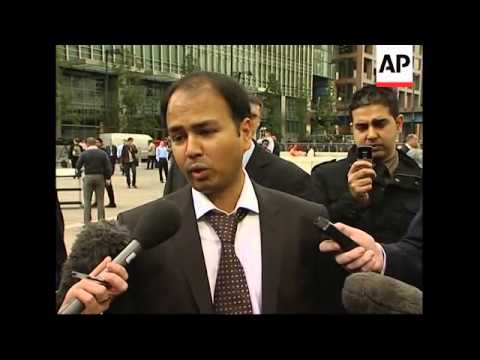
25,000 PEOPLE WALKED OUT WITH THEIR ENTIRE DESK IN A CARDBOARD BOX AND NOBODY EVEN TURNED THE CAMERA OFF
no narrator. no music. just a security guard and a line of people carrying everything they own out of a building that no longer exists.
September 15, 2008. Lehman Brothers. the largest bankruptcy in US history, filmed from the sidewalk while it was still happening.
176 years old. survived the Civil War, two world wars, the Depression.
gone in one weekend. Poof!!!
1 Like
When Enron went belly up in Houston I worked in the building next to theirs and saw the employees leave with their bankers boxes. They too lost everything, quite sad.
During the 2008 housing debacle my sister’s husband was partnered with another guy flipping houses in Milwaukee. Naturally he was left unemployed after the crash with no prospects for employment. They almost lost their home to the bank. Luckily I was financially in a position to give them money to pay the arrears and keep them afloat until his railroad retirement claim was processed and he got a part time job at Home Deport in their tool department.
2 Likes
It takes alot of sweat, curiosity for knowledge (mostly stuff the masses write off) maybe pain, waking up, searching etc… to not get caught in that trap.
Good people get hurt.
Boom/bust cycles are as old as the hills. And no matter which boom, it all has one thing in common. Land, and the rent collectors.
Infrastructure creates demand. Demand drives land value. Landowners capture the gains. Banks, governments, and developers already know this.
And this is the bottom line on Trump. He knows it. He is a rent collector.
I see all the signs of another bust. Every abandoned lot in NYC, no matter how small, every industrial complex, junk car lots, has a crane over it. That only happens at the end of the cycle. Houston in the 80’s. The Empire State building opened empty. No tenants.
Everything is the highest and biggest at the end of the cycle. Worlds tallest buildings all being listed on wiki, the most paid for a digital painting, mania into crypto, highest paid sports salaries. War…The worlds biggest wall with a mall inside (so he said). When they all happen together, every time, it’s a sign. It’s an invisible language, tracks in the sand that have to be noticed and registered.
Most people don’t have the time or inclination to look into it until it’s too late.
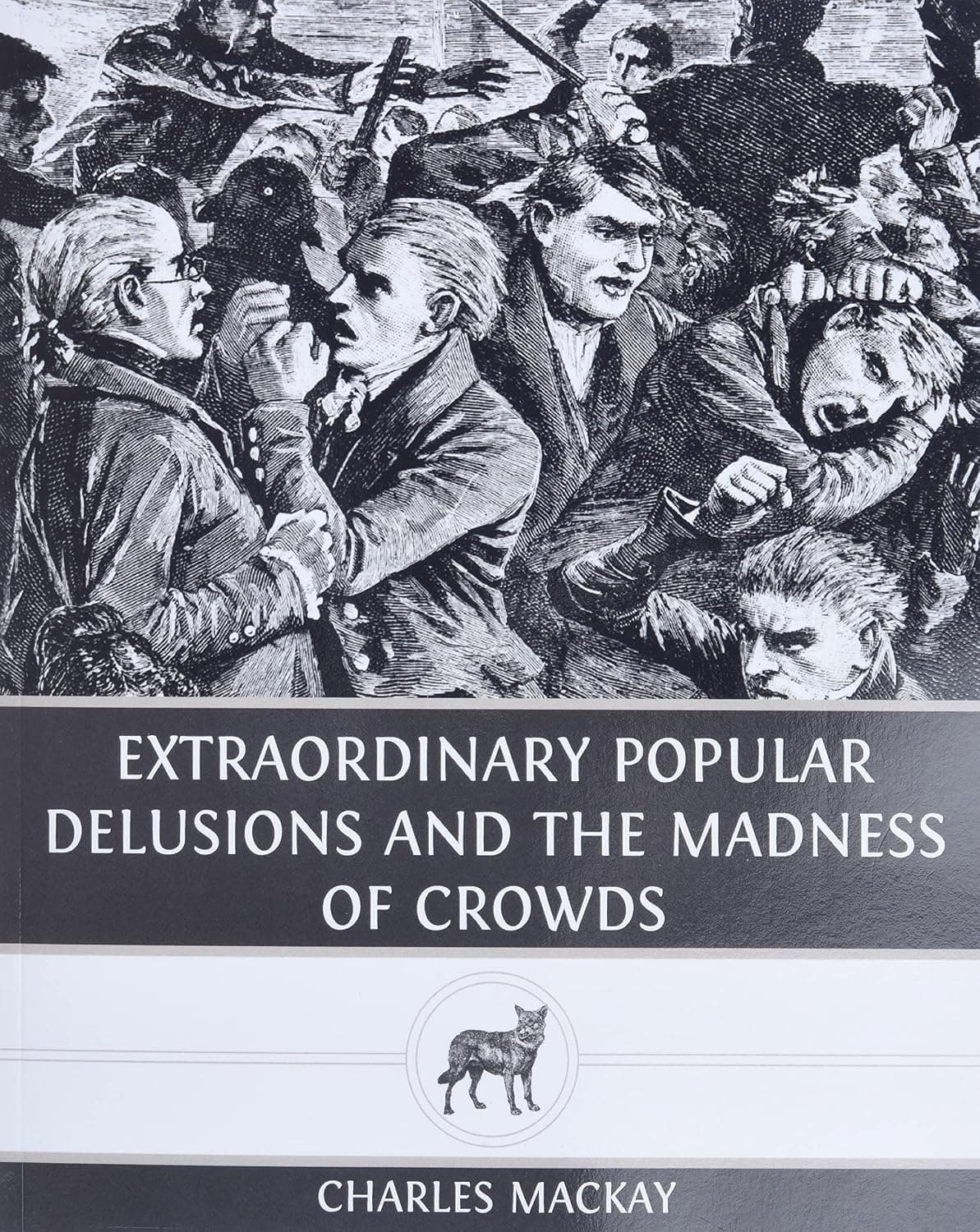
I am currently reading Eric Hoffer’s book, “The True Believer”. Mackay’s book seems to be 100 years before his.
The danger lies in the perceived autonomous activities of so called AI. In Legal/financial terms, Its a digital strawman. The use of so called AI is a very good example of the two way ,mirror erected in the financial system, in this case, not even trying to obscure the transaction but hiding the actor or actors behind this AI scheme, while still being able to claim transparency in their dealings.
The perceived autonomy of AI systems, is just the way to disassociate the actor from the deed.
Its like claiming, the last domino in a falling row of dominos, fell by it self.
All in the spirit of the standardly practiced, but veiled business model.
Lie to everyone, steal from everybody and reject or defer all risk and liability.
3 Likes
I’ve thought for some time about possibly doing a book on the quants and what they’ve done to markets…
1 Like
… it has been over 15 years since Patterson’s Quants. The follow up to Quants was Dark Pools: The rise of A.I. trading machines and the looming threat to Wall Street (2012).
I’m sure there are aspects of AI trading worth a new look. I can’t imagine what has happened in that area in the last 13 years. Those two titles are for lack of a better word “conventional” in their approach. I would imagine the space for an “unconventional” extension of those earlier accounts and assessment of the current situation to be quite wide open.
… see also Dark Pools: The Structure and Future of Off-Exchange Trading and Liquidity by Erik Banks
1 Like
Yes I read that one too… My impression, from doing the research at the time I thought about doing a book about it, was that they were missing something, and that’s still my impression…
1 Like
… yep, they are missing a “couple” of things. 
Catherine and I have discussed this problem privately often, and we’re both still trying to figure out what “it” is… I had an idea a few years back, and it won’t go away, so perhaps it’s time to try and see if it makes any sense… It’s one of my “it’s-so-daffy-I’d-rather-not-mention-it-until-I-at-least-have-a-scintilla-of-evidence” sort of thing…
… there are a couple of good pieces by Brysen and Digmun in
 The Oxford Handbook of Ethics of AI
[Markus D. Dubber (ed.) et al.
… and also Triclot, M. (2024). Ontology and the politics of information in the first cybernetics. In Y. Hui (Ed.), Reconstruction, cybernetics for the 21st century: Vol. 1. Epistemological (pp. 67–84). Hanart Press.
… also see 3 titles by James Fetzer

… and 
… IMHO 3 problems hop to mind 1) Ontological Conceptions 2) Category Problems and 3) Agency / Autonomy as it is related to 1)