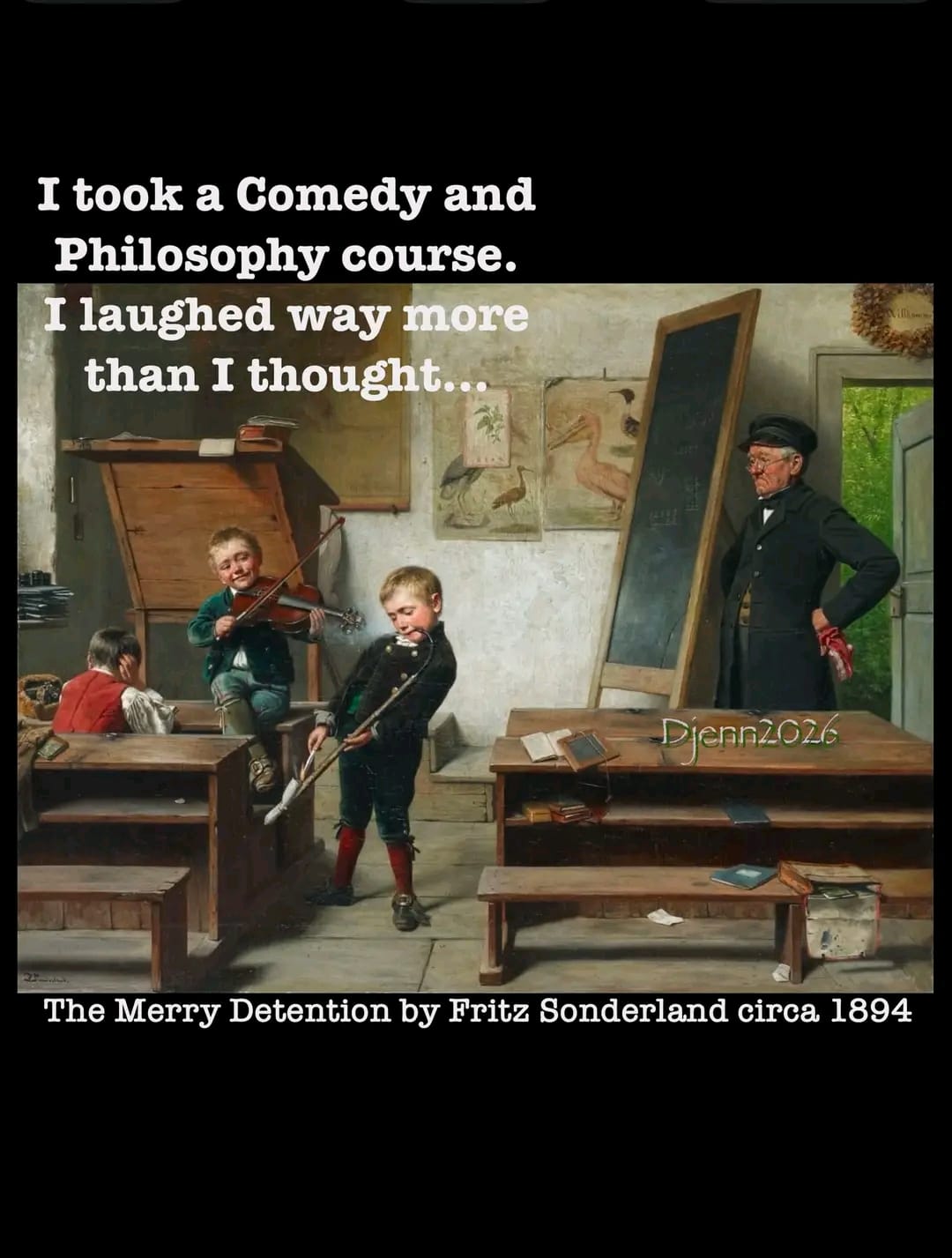
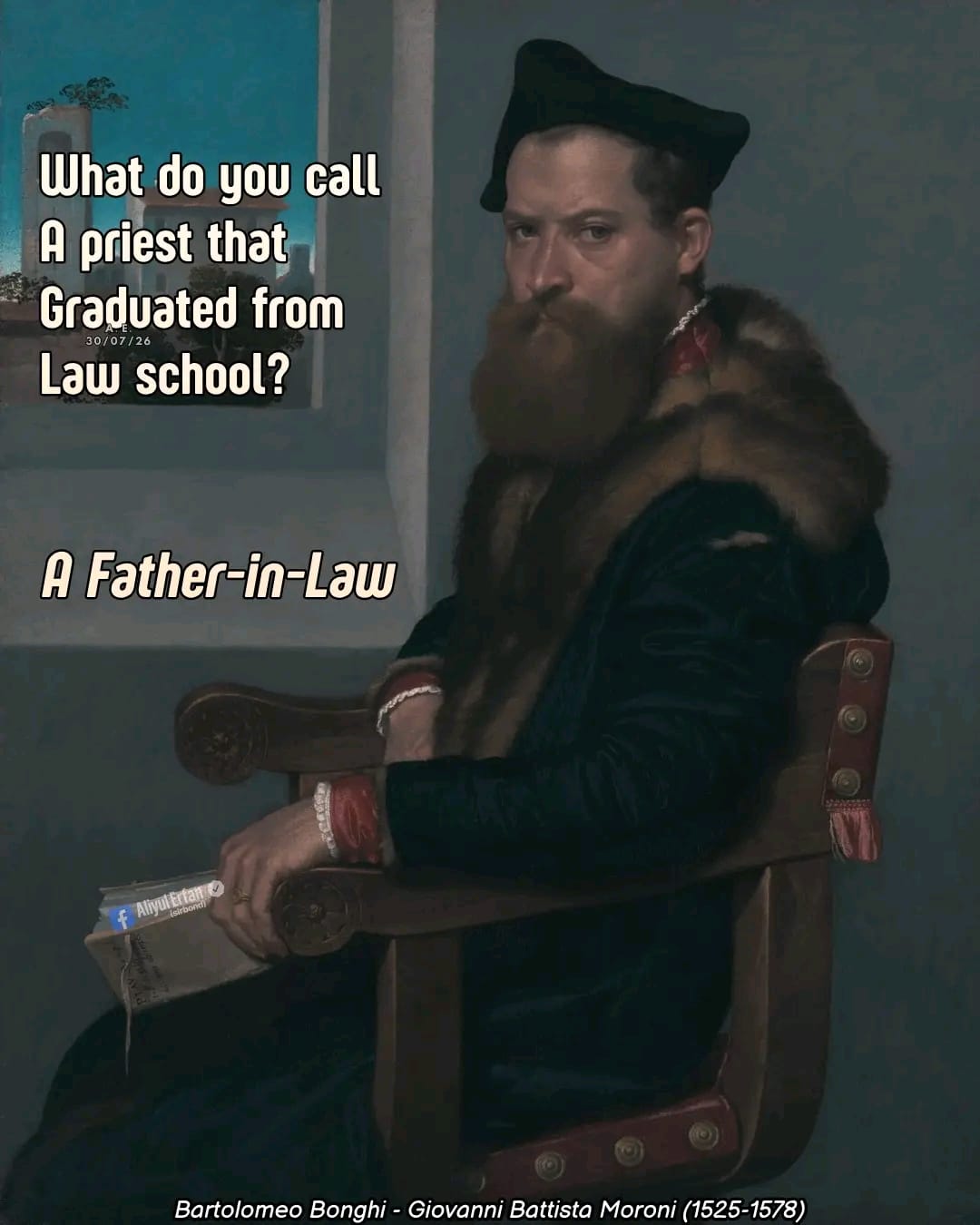
I’m looking for some good news. That includes things humerous, silly, lighthearted. A little Wodehouse and The Empress at Blandings. “Ill have what she’s having” sort of thing.
This week has been a real slog.

I’m looking for some good news. That includes things humerous, silly, lighthearted. A little Wodehouse and The Empress at Blandings. “Ill have what she’s having” sort of thing.
This week has been a real slog.
Muahahahaha!
That’s absolutely perfect.
Thank you!
We know what you mean, Edmontonsockmoney, about needing a lift after a heavy week.
We have found Andre Rieu’s full concert videos (featuring cheerful music) to be very therapeutic – they have helped us to feel grounded with a counter energy to what’s being blasted at us by our culture. We’ve collected his videos from thrift stores (the older ones that are no longer being produced) and also purchased some of the more recent ones from his web site.
He has posted a few videos on his web site, of full concerts. If you like old-fashioned European music, scroll through his collection and maybe one of these concerts might give some uplifting energy:
Andre Rieu’s attention to artistic detail fascinates us… and the musicians in his orchestra are top notch.
(btw: We read all of the Wodehouse novels – many years ago!)
Thank you!
I studied music in Vienna many years ago. I went to the concert halls 3-4 times a week.
How wonderful that you made that choice, and made this happen in your life!!!
What an enriching life experience upon which to draw!
We used to go to local concerts more frequently in the past, but much less so these days, as the arts are being spoiled with ugly staging, ugly music, dark and grim themes that seem to mock our sensibilities. The staging on operas is very bleak and minimalistic these days – the artistic directors are robbing the traditional operatic art of its essence, and flattening out the (formerly rich) dimensions.
I’m trying/hoping to find a source to purchase some beautiful full-length opera DVDs with attention to visuals and staging, and coming up empty-handed, as it seems like a wrecking ball has been taken at the arts. There is no local store where one can even find opera DVDs, let alone trying to find ones that try to stay true to what the composers originally had in mind. The modern arts gangs forget that part of the essence of opera was the multi-dimensions of the art form, the inherent beauty of the moving theme through the soundscape, and scenery and staging and acting were integral to this form, which has been all but flattened to shreds of the former glory.
You must, undoubtedly, have experienced some beautiful staging in Vienna, to frame the music, hopefully that honoured the spirit of the era in which the music was first composed, along with its intended effects through staging.
I listen to opera CDs. I don’t watch the DVDs, so I don’t even know what’s “out three”.
HOWEVER!!! There is a FABULOUS DVD of the National Ballet (London) performing “Alice in Wonderland”. It’s great! It is new and modern, but not ugly. It’s actually quite humerous. There were a few times I laughed out loud (Act II). Check it out!!!
This is how Aussies dance … (comedians Glen Robbins and Jane Turner from the classic series … “Fast Forward” … '89 -1992)
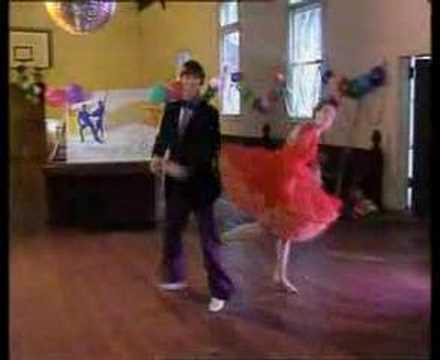
Thanks for sharing that, and also your own favorable impressions of the “Alice in Wonderland” Ballet!
I glanced at an excerpt of that ballet (on Youtube) and found that it somehow created a dissonant resonance for me, via the “Affektenlehre” in the music – being hypersensitive to the sound realm. The music in that segment felt more like a kind of sound affect, than the rich melodic music of bygone ballets and operas. For me, as well, I have not yet connected with the tale of “Alice in Wonderland” (or even the Grimm Fairy Tales for that matter), as I’ve felt something dark embedded there. Which is maybe worth exploring. I’m glad you found some humour in what you experienced, and of course, your experience was based on full context, not a segment sampler like what I’ve done.
I really love the music of the old Viennese operas: Mozart, Lehar, Stolz, Kalman, and the older Russian and French ballets. Despite that those ballets and operas/operettas also had dark moments (as most do, since they all have political themes of their eras embedded in them, just as the modern ones do as well).
Act II “Queen of Hearts”. It’s fabulous.
It’s a spoof of the Rose Adagio from Sleeping Beauty
Thanks for sharing!
Reminds me of traditional British Pantomime spoofs (where cross-dressing in the main roles is a common theme of that genre – and here you have a very masculine-like ballerina…).
Thank you, I enjoyed that and it allowed me to let the positive in 
The Big Opera Houses, New York, Paris, Milan all stream their opera’s. Pay per view. https://www.metopera.org/season/in-cinemas/
And they also stream it to big cinema’s so you can watch it on a big screen. I personally haven’t gone. Not a huge opera fan. I like Wagners Preludes and Overtures performed by a great orchestra but 3 hours of German is tough. And Italian Opera with all that dry recitative isn’t my cup of tea. Last time I went to an opera Pavarotti was still around and it didn’t do it for me. A little over the top for me.
Reau is a little too “shmaltzy” for my taste but he obviously entertains the crowd and people are uplifted so that’s what people go for.
Grimm Fairy Tales are a huge rabbit hole. There is some conjecture some of those come from Ancient India as many of the tales are similar to ancient Indian tales.
The Jungians, Maria Von Franz, and others have written books interpreting them from a psychological perspective.
Gold, Three’s are symbolic. The The Golden Goose, Three Golden Hairs, Golden Bird, Golden Child, Rumpelstiltskin spins gold, golden key, golden arse, etc, etc…
Then it invokes another ancient concept. The Law of Three. The Golden Mean, three people, the hero must complete three difficult tasks to complete, three trials, Three Feathers, Three Golden Hairs, Three Wishes etc… This concept is occulted in all spiritual literature including the Bible, Saint Patrick Breast Plate, (the 1 in 3 and 3 in 1) Hindu Scriptures and in politics and society. It’s a critical mass moment.
And finally, there is always a king and queen. They are usually old and decrepit, and there is unrest in the Kingdom. Sound relevant to today’s times? It represents a turning point. A Zeitgiest, or Blow Back
You’ll find shared mythic elements that are in almost every spiritual tradition.
It’s basically occulted wisdom hidden from the masses. It demands more than superficial reading to get to the core.
That is a good way of putting it. Fairy tales, myths, then staged via plays, pantomimes, opera, ballet – all of that. Some of it – “occulted wisdom”. Some of it – veiled political statements. And some of it – capture and manipulation of the public mind (by the occultists who control theatre operations).
Thank you, reddclay, for sharing your own personal take on the opera genres, Rieu, occulted mythology symbols, etc. Especially as your own experience of these kinds of genres (like opera) differs, a little, from my experience – and that may even have to do with having our parents as part of the equation.
Mom took me to see “Die Fledermaus” (“The Bat” by Johann Strauss) when I was 8 years old. And prior to that, she took me to see “The Sleeping Beauty Ballet” when I was even younger. When you see these performances as a child, something happens inside, a kind of mystical wonder opens up the imagination. And, by the way, for anyone who has never seen an opera, from start to finish, I would recommend “Die Fledermaus” as one with which to begin such a journey. It is light, cheery, fun, comedy. People go home with laughter in their hearts. (Perhaps feeling like Edmonton Sock Monkey did with the Alice-in-Wonderland dance spoof, with the talented acrobatic dancers).
Although, that said – It seems that nowadays, the old art genres are being butchered. The lavish staging and costumes seem to be gone (at least in my own community). The staged roles are often made up into freaks that remind one of the woke cult which is being staged in real life everywhere we go. The stage acting sometimes flatter and more wooden than what I remember. Albeit all that still with occult symbology … almost right in your face.
I have met very few people who like opera or ballet, and my guess is that these art forms need more effort to be able to enjoy, than, say, a staged musical. I’ve had to invest in opera guides and study the libretto and opera notes before seeing any live opera, along with attending interpretive talks that are offered before an opera performance. I would not otherwise enjoy this art form fully, without these tools at hand. What has really amazed me with these forms of art is the multi-dimensional artistry: so many different things are conveyed at once, to eyes and ears and brain – and we have seen some amazing stagings. I have been floored with the acting, especially of talented opera and ballet artists – how they manage to move around the stage, while rendering their facial expressions and conveying various emotional states through superb acting, all the while singing very complicated lines, every single second changing in colour and character and all at once synchronized fully to the music and its rhythm and emotion. Conveying these things all at once takes a kind of skill that is of a different realm altogether, and is breathtaking in musical artistry. For myself, the proper staging of a traditional opera or ballet, to present this art form in its full glory, is the culmination of musical artistry.
I’m examining certain operas, historical themes, etc., and therefore searching for some good older DVDs, hopefully to find ones with some remnants of beauty in them (to be able to revisit certain scenes of interest). A lot of modern staging is ugly (both in live shows and in DVDs) – and one thing I don’t like about streaming or DVDs is that the camera zooms in and focuses on one aspect, while your brain naturally wants to view something else. That frustrates me to no end, which is why I have always preferred LIVE performances. It’s just that what’s on offer recently is occulted sorcery, feels like intended more for mind capture than art. And, it almost mocks the traditional art form.
You mention Rieu as being schmaltzy. I used to have that impression way as well. Until I started watching his concerts from start to finish. And, then viewing the “behind-the-scenes” shows, and reading his family’s biographies. There’s something way more complex going on behind the scenes, that we find fascinating. It wouldn’t surprise me if there’s a bit of free-masonry that may be influencing the art – who knows? But the attention to beauty is remarkable, and his family’s life story is also quite amazing – how a musician develops from relative obscurity into someone who is world-famous, who draws crowds of thousands to watch so-called “fluff” – but who presents beauty for our eyes and ears. He had to overcome a lot of opposition to do this, and that is an interesting part of the life story of an artist like this.
I agree with so much of what you say. We’re on the same page.
Opera totally requires study to get maximum enjoyment and to follow the plot. It’s useful to have a good mentor to initiate you. It’s like Grimm Fairy Tales. The more you know, the more intriguing it is and more you appreciate elements that you would have not noticed without somebody to point out the finer details.
Other than the Nutcracker, which I enjoyed as it is a New York Tradition, I haven’t spent time viewing Ballet but it’s not that difficult to enjoy anything Tchaikovsky, The Sets, the customs, the lightening all contributes to experiencing a kind of sacred space. It’s sort of an initiatory space where transformation is possible. The theater experience or communal viewing of art, theater or music also is a powerful phenomena.
I totally get the childlike wonder that gets opened as a kid that draws you into theater, music etc… I had those experiences too, but not so much given to me by my parents.
I have to take your word on the decline of staging, costumes as I am not an avid consumer of the art form.
My impression of Reau is the classical version of Lawerence Welk. That’s just off the cuff. I once had a jazz professor tell us that he watched Lawerence Welk every week and we shouldn’t laugh. They were top tier musicians making a living playing music every week on tv. So you cannot say the musicianship was bad. It’s a stylistic thing. My dad probably loved it. I wanted to hear more modern sounds.
Strauss to me is light, Victorian dance music. Waltzes and polkas. Maybe even a little bourgeois. That’s my subjective impression. That’s not good or bad because you can see by the people’s faces that they enamored by the entire thing. But the macarena? I get you have to program for the audience. If I was looking to buy season tickets for the orchestra, and I had to choose my favorite programs, I probably would pass. But it might be something my wife would enjoy more than me. But man, that stadium was packed. Big outdoor arena.
You might have more of a resonance for that period than I do. The romantic composers. I like Mozarts Piano Concerto’s. The Magic Flute obvious has nice aria’s for a singer to show off their chops. Just not my favorite.
When I got out of college, my first job was working for a top booking agency for classical and jazz artists across from Carnegie Hall. So I got tickets.
One night a colleague and I went together to watch the Philadelphia Orchestra conducted by Riccardo Muti. That’s a good ticket.
. I don’t recall everything on the program but they performed Wagners’s Lohengrin. That’s all I needed. I could have walked out after that and just let the performance linger. True for any good performance.
I always thought that was a powerful piece that transported you to other worlds. Holy Grail and King Arthur mythology. I’m in… I remember going with a coworker. A young woman. She wasn’t a musician and familiar with the music but I turned to her after the piece and she was balling her eyes out. The music provided her with some kind of cathartic experience that was powerful.
If I were to choose a composer from that time period of Strauss that gives me a powerful experience. I’d choose Cesar Franck. Franck’s Symphony in D minor (1888) it has a profound, almost spiritual quality — so in a subjective sense, yes, many people experience it as something close to a “holy grail” musical moment.
Franck was a deeply religious organist and composer. The symphony has a solemn, cathedral-like atmosphere (especially the first movement’s slow introduction and the finale).
The music moves from darkness and struggle (D minor) toward radiant triumph and peace, which many hear as a kind of redemption or transcendence. The emotional arc and sacred feeling is totally different than what Strauss was doing.
While it has no connection to Easter or Christmas, I don’t see why that piece couldn’t be programmed at either time of year.
Thank you very much for your deep insights to connections with music, and also for sharing the video of the Franck concerto. I really enjoy reading your thoughtful perspective.
It is interesting, how people do connect with different aspects of music. For me, personally, I have found my tastes have changed a little with time as well.
I really love the powerful and gorgeous Prelude and Bridal Chorus from Lohengrin, that you also mention. And it inspired King Ludwig II in his castle-building adventures. (The murky story of King Ludwig II is one that fascinates me).
And as for Strauss – his music may “seem” frivolous, if one simply listens to the lighthearted melodies and doesn’t peek beyond that. I’ve read some autobiographies about his family, and they are crackers of a read. Those times were very turbulent, a lot of military killing operations in Europe at that time. So, what happens? To lift the Viennese depression from this tumultuous state of unrest, the Strauss family concocted all these cheerful waltzes and some operas. I’ve heard some people say that one in every two Viennese was out dancing every week in the dance halls (that statistic seems a bit of a stretch), to get the mind off the fighting. At any rate, because of Strauss, waltzing became a cultural pastime, that softened the edge of the terrifying darkness that surrounded the folk.
I love the Fledermaus Overture and can listen to that over and over. There’s not only beauty, brightness, elegance, but also something powerful, some strength, some optimism conveyed in there. Some element of joy and beauty thrust into a politically very dark and frightening era. I somehow feel that there is genius in someone who is able to inject some Joy into a population who is otherwise cowering in fear during dark times. We don’t see that happening nowadays – our culture has evolved into something entirely bereft of Joy. And this is not a good sign.
A famous music educator and long time professional pianist once said in a masterclass, we listen to what we need.
My “needs” have changed also. I do not want to listen to the music I grew up and loved. It now sounds cliche too me. Listening to new composers and new artists to catch a sense of the Zeitgiest of the day and what is being fed into the eithers.
Your point about Strauss serving the purpose to lift the Viennese depression from a tumultuous state is deeply insightful.
Yes, it seems that way, doesn’t it?
Although, nowadays, we also are forced to listen to things that we don’t need… in all of the public spaces. Everywhere you go, this awful drab noise assaults the senses.
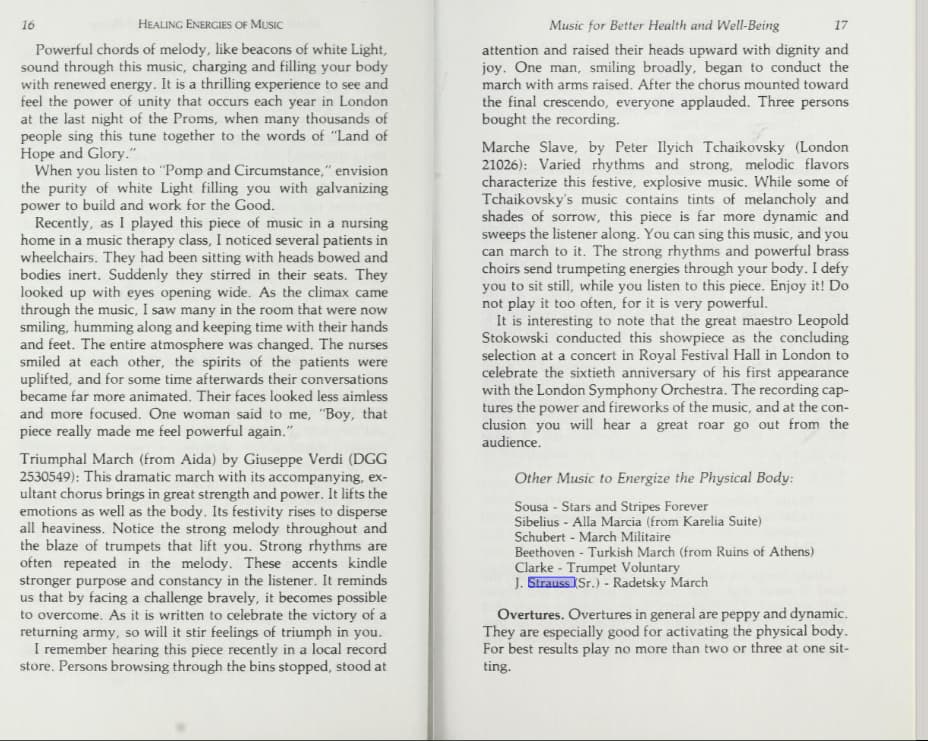
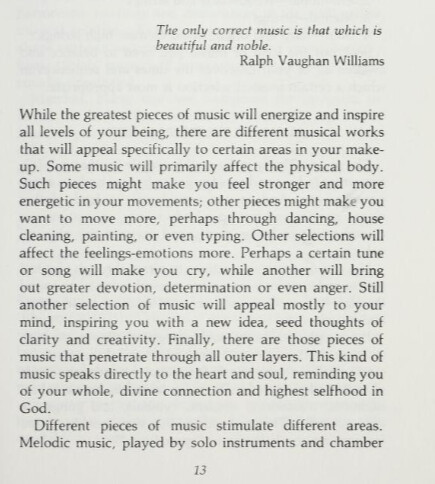
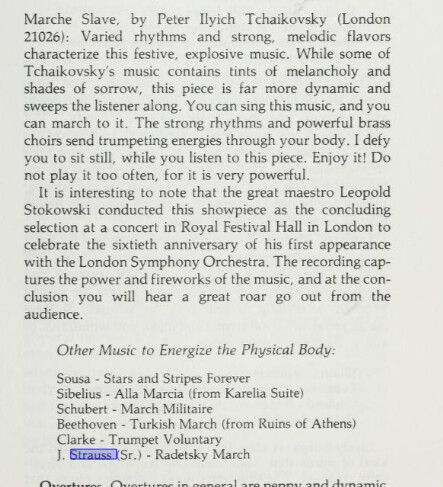
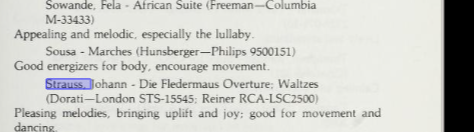
Thank you for the interesting book excerpts by the music therapists! They list beloved pieces that are longtime favorites, that endure the test of time.
For me, one’s chosen soundscape is important for mind health. It’s a kind of “nutrition”. Whether one wants to exist in a dark and compressed state, symbolized by minor and dissonant (“closed” and “compressed”) chords and erratic rhythms, or in a joyful more harmonic and vibrant state, symbolized by major (“open” and “rarefied”) chords and various regular rhythms. Our culture tries to keep us in a permanent compressed state, and we have to work very hard to lift and keep ourselves out of that state (a kind of personal “counter culture” so to speak). Music is one powerful tool we choose, among others, to help us access that realm of higher vibration.
We listened to the Cesar Franck Symphony in D Minor that you shared (thanks!!!). I can see what you mean about it starting dark (although that went on a bit too long for our taste) and then evolving into something more uplifting at the end. Franck was probably affected by all the turmoil in Europe during his lifetime, and this music probably reflects what he was feeling. Many composers do put their feelings onto paper and into their music. And, in some ways, that piece embodies the Dark Minor Chords trying to suppress and oppress us every which way even in our modern culture.
I would not, myself, turn to Franck to lift me up – but do see him as painting a portrait of a time, and being rather true to his feelings about it. And, I suspect you appreciate that raw musical honesty in his work. As for something truly beautiful, I love his Panis angelicus!!! Absolutely gorgeous!