
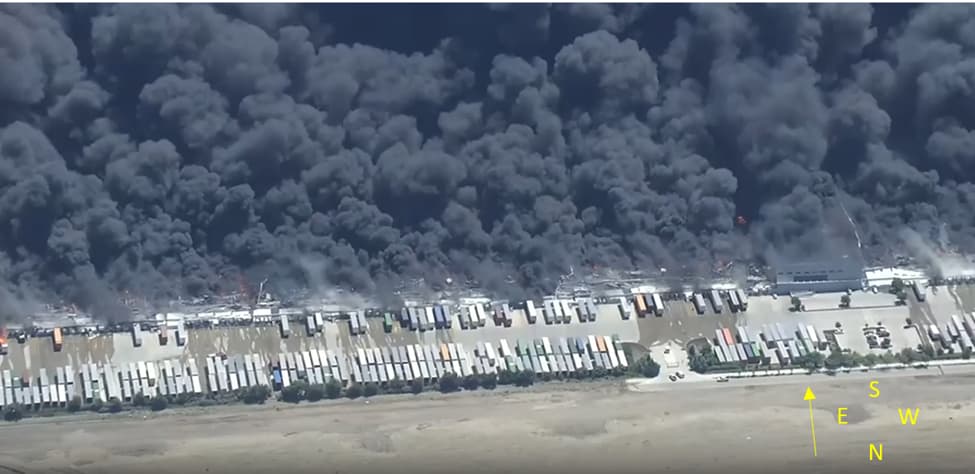
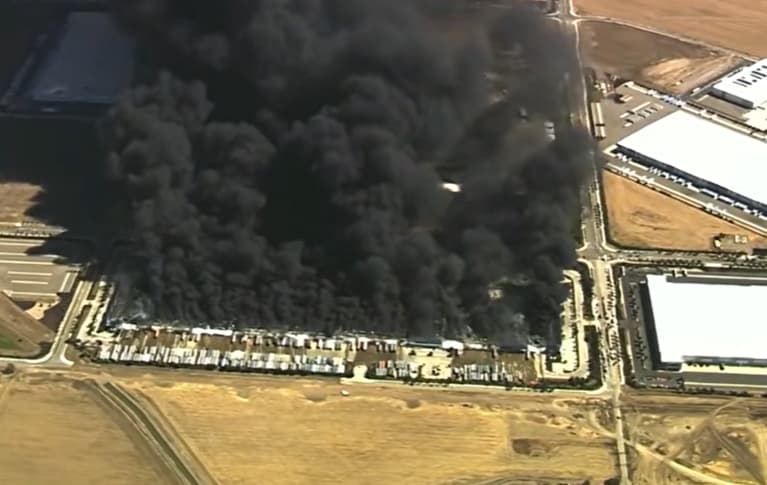
I happened across this live yesterday. Media reports at the time were limited to videos of the smoke plume as seen from a distance.

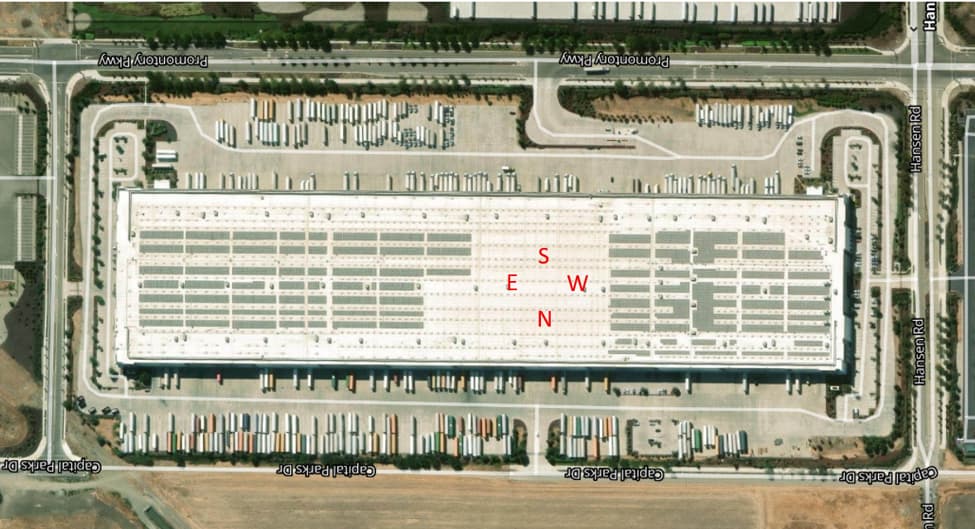
The facility was one million square feet in size (as shown below).
There are multiple viewer videos online which capture some of the fire intensity:
Videos: Massive fire at Medline Industries warehouse in Tracy
Video of possible start of fire:

Tracy Fire chief gives update on massive medical warehouse fire, citing water supply issues
Question presented to the Fire Chief during the video:
“Any thoughts as to how this was able to spread this fast, this quickly? Because if you look at the Alert Cameras, in a 30-minute period, [it] went from a little bit of smoke to this entire million square foot facility.”
Fire Chief answer:
“Yeah, we had water supply issues and we don’t know why. Um, and we are not sure if the, um, sprinkler systems that protect this facility operated appropriately. First thought was aggressive fire attack and the sprinklers were not operating, so that we’ll have to find out what happened to the water supply… but things worked against us. Again, water supply issues, low humidity, high winds and high temperatures. And so, it was a little bit of the perfect storm for this fire evolving quickly.”
Weather in Tracy, California, USA June 11, 12:00-1800 (PST) during initial fire conditions:

So, let’s think about this a little bit.
No Water: Sprinklers inop, dead hydrants, had to daisy-chain hoses with pumper trucks; yeah, fire is definitely going to progress. Absolutely a contributing factor.
Low humidity? How much does low humidity contribute to fire spread in a large structure like this warehouse? I don’t know for certain, but it seems the fuel (structure and medical supplies) would be negligibly impacted as compared to grass and forest fires.
High Temperatures? It was a hot day fershure, near 100F in the afternoon. Would the fire have spread any slower had the temperature been 75F instead?
High Winds? Smoke plumes on videos show steady wind out of the north, which is supported by actual weather records (13mph). If the wind had any impact on fire spread, it should have only pushed the fire south, yet the structure became fully engulfed east-to-west very rapidly.
.
.
This is eerily reminiscent of the March 15, 2022, Walmart warehouse fire in Plainfield, Indiana.
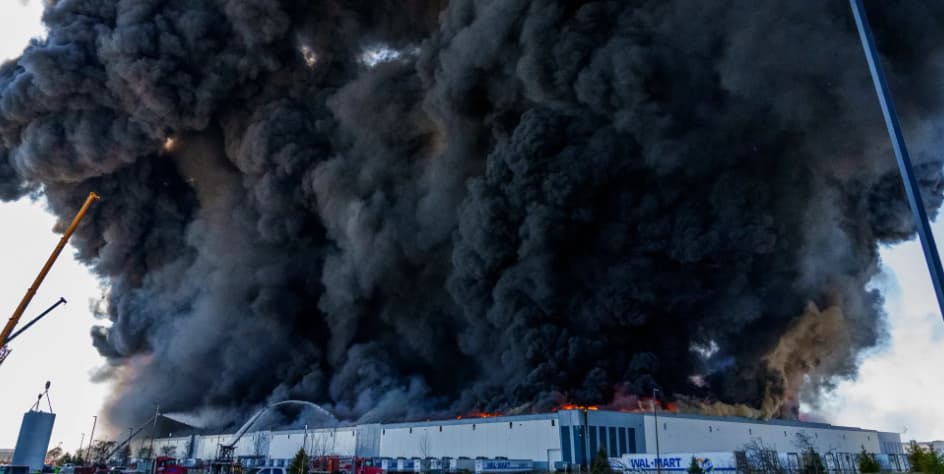
The fire spread with incredible speed and intensity. How is that possible?